Call of Duty: Black Ops 4
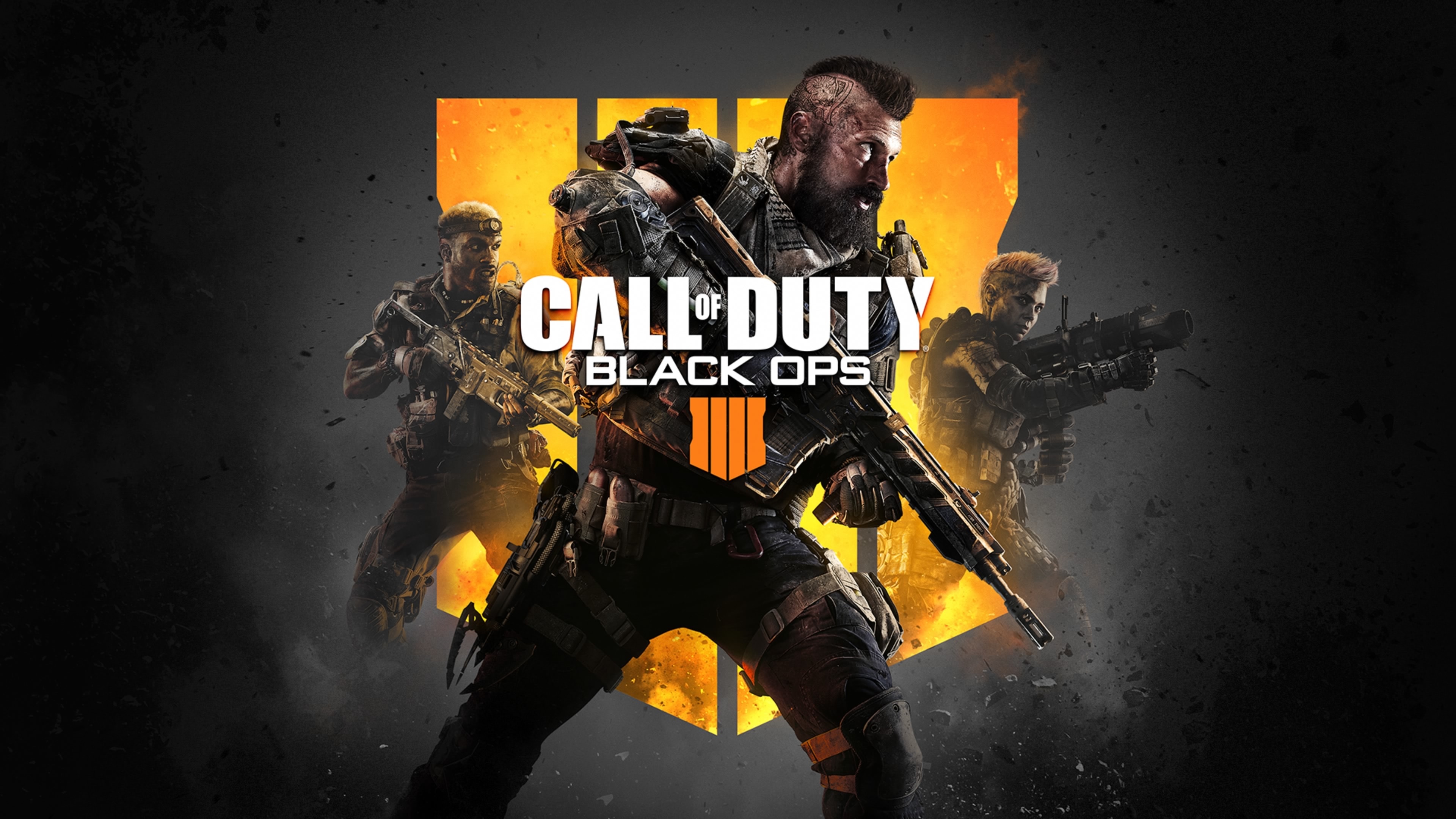
Treyarch hired me as an in-house concept artist in March 2018, less than a year before Black Ops 4 shipped that October. In the 7 months that followed I created designs for all three of the game’s modes, and my key images helped cement the look of a new one: Blackout.
To say I was excited to join the Call of Duty team would be an understatement. I was enamored. I’d spent 5 years behind a bar paying for my bachelor’s degree, and the next 3 glued to a Wacom tablet taking on freelance clients and building a portfolio. Some highlights from those gigs: arch-viz paintovers for a Transformers theme park, and photobashed mountain getaways for a VR wellness app. More than anything I wanted to break into gaming. I’d grown up playing Black Ops online with friends since the PS3 era. So when I got the call to come in on the next installment, it was the end of a long road and the start of a steeper one. This was my moment to really challenge myself and grow as an artist.
Multiplayer
My first assignments were on the multiplayer team, on the maps Payload, Arsenal, Gridlock and Nuketown. I researched and organized the reference the team worked from, designed props and vehicles, and delivered redlines for the environment artists (paintovers with notes on set dressing and storytelling).
Gridlock
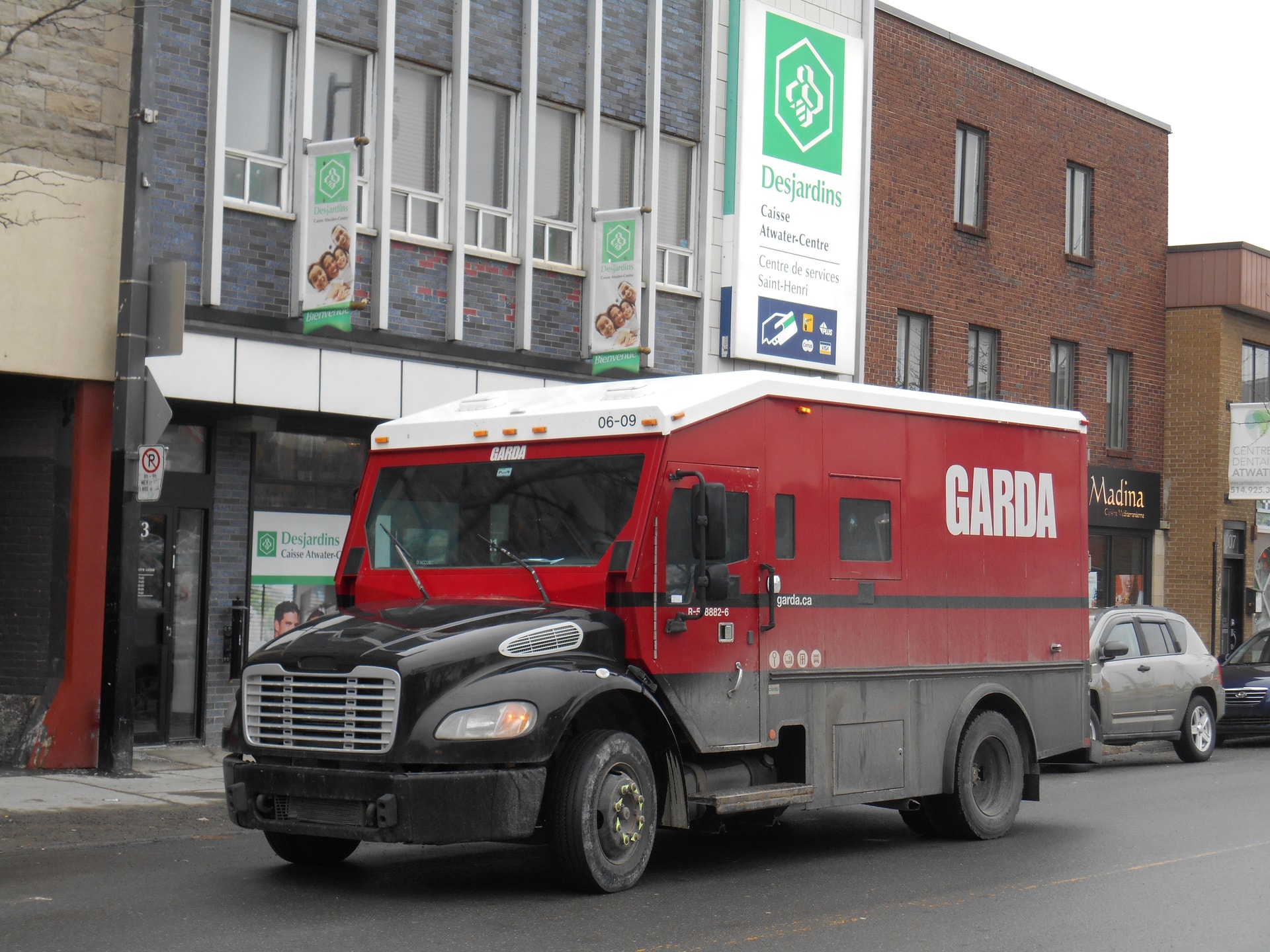
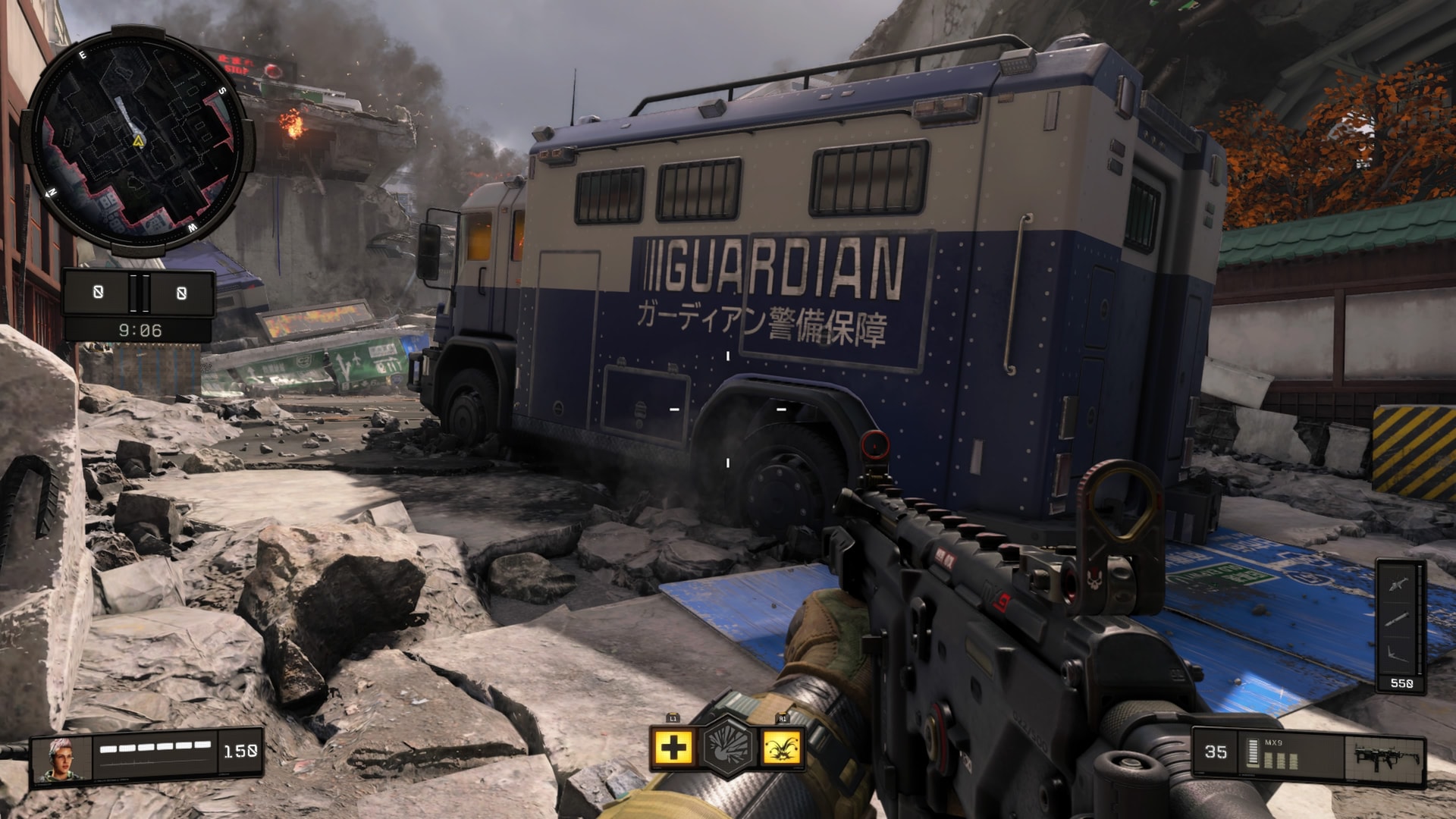
As a fan of crime thrillers, I’d always been fascinated with the flashiness of armored-truck heists, so I was thrilled to get to design one for Black Ops. Every vehicle started from a real-world reference, but had to be remixed just enough to clear Legal’s stringent bar. My pitch was modeled on the trucks used by GardaWorld, a Canadian private security firm. Their red trucks stood out, which I felt fit in a Japanese setting. We of course couldn’t use the GardaWorld name, but I’d been playing a lot of Destiny 2 at the time, where players are called Guardians, so I suggested that instead, and it took. The red didn’t, and the truck shipped in blue & white. Gridlock being set in Japan, I added the katakana version underneath so the truck would fit into its surroundings.
Nuketown
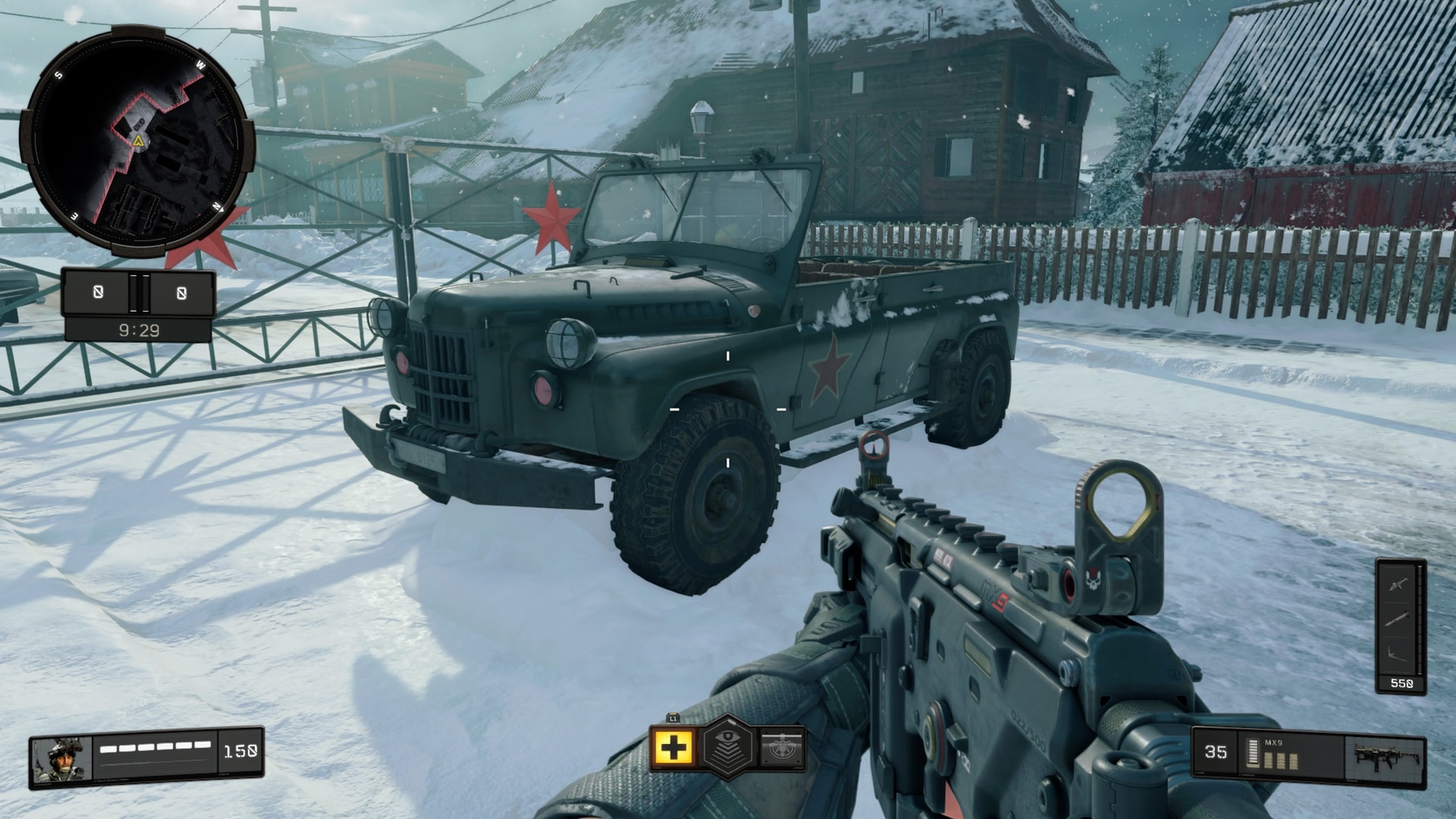
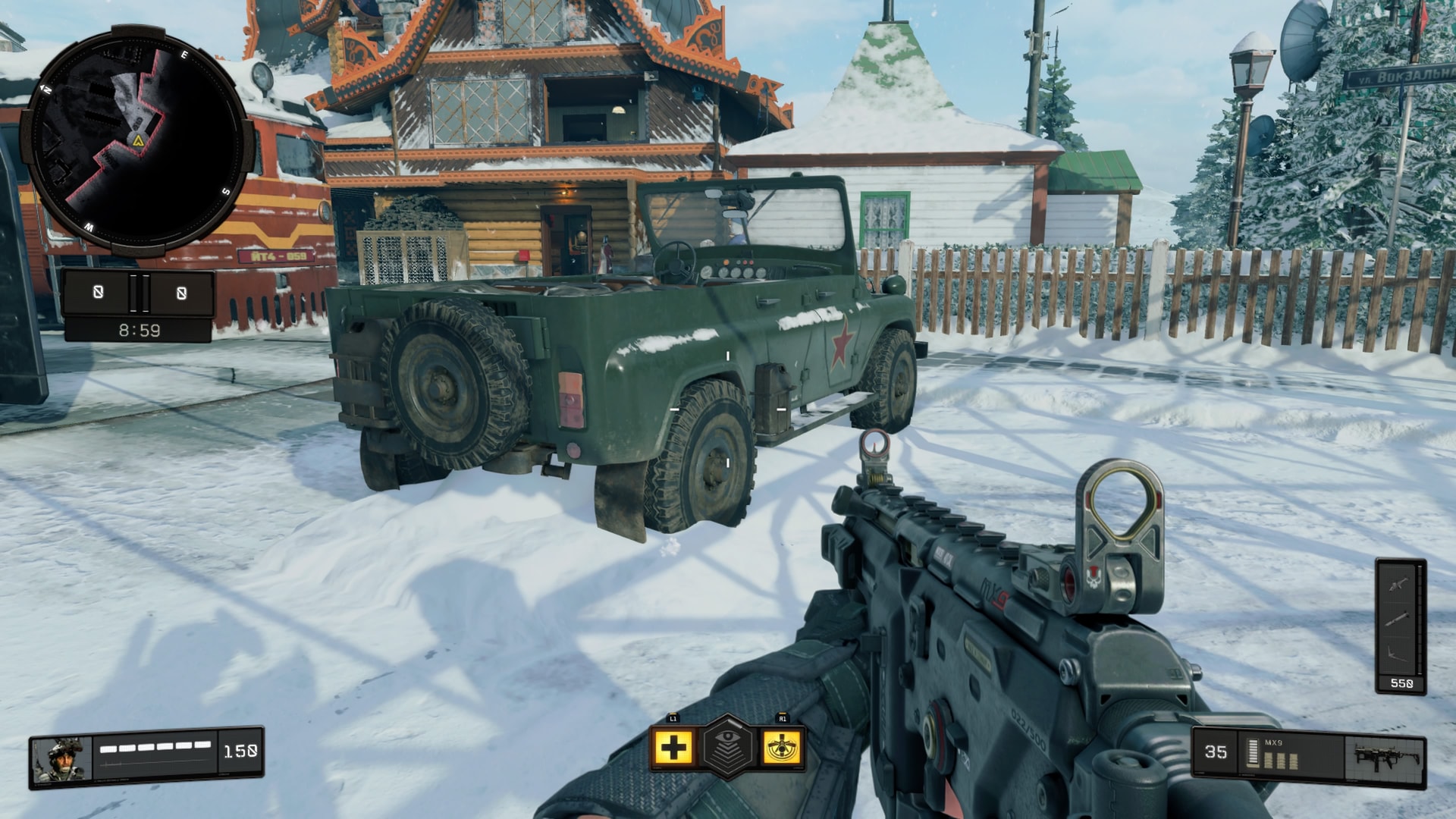
Nuketown from the original Black Ops came back as a Soviet-era remake, and I helped flesh out the props for this version. The jeep I designed is a riff on the GAZ-69, a Soviet off-roader built for harsh climates. We kept the caged headlights, the rounded hood and the spare tire on the back, and remixed the rest. I added a gas can on the passenger door and at the rear by the tire.
Payload
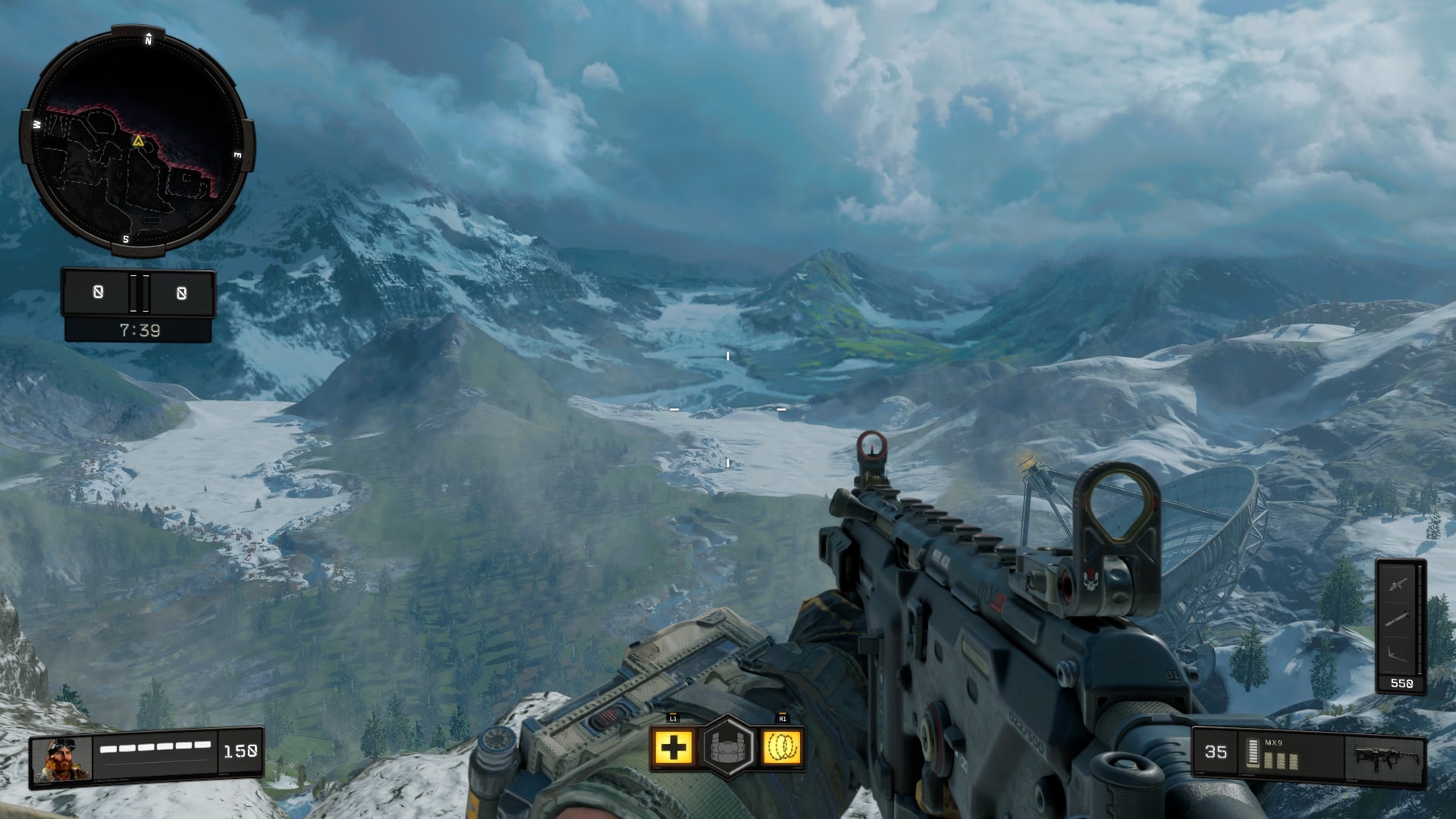
I painted the vista concepts for Payload, which set the look for the mountains, sky, and lighting. From there, the matte painters and lighting artists built out the final skybox. The map is set in Iceland, which I’d passed through on a stopover in 2017. I drew on that trip, and on another in the Swiss Alps, to parse out how perspective warps at high altitudes, how thick the fog sits in the valleys. I’d always thought of the map as a nod to James Bond, so I wanted it to be dark, brooding, and dramatic. A vista like this is great to work on; it sits outside the gameplay space where the level team scrutinizes every sightline, so there was a little more creative freedom in designing it.
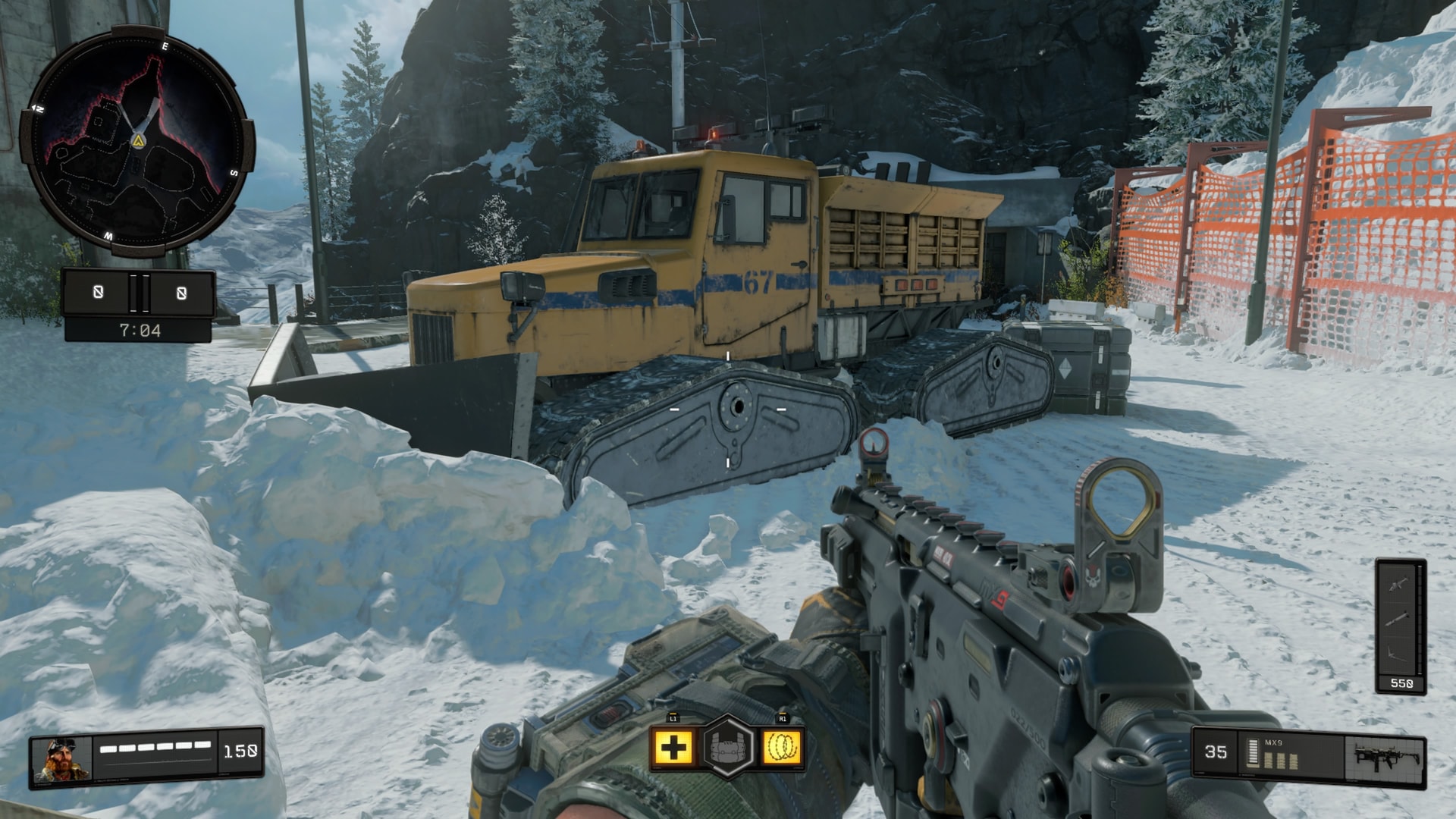
In the playable space I designed props and set dressing, the plow and the fenced-off snowbanks along the road. Payload, Arsenal and Gridlock launched with the game, and Nuketown followed in November as a free map.
Blackout
Early in my time at Treyarch, our art director put me on a two-person tag team to explore a new game mode. Blackout was the first battle royale in Call of Duty, 80 players on one map in the vein of PUBG and Fortnite, and it had to launch with the game. The map was set on the coast of Southern California, and every point of interest on it was rebuilt from a location in an earlier game, from multiplayer, campaign or Zombies.
The Blackout map changed every day. Each morning I synced to the latest build, booted it and flew around to see what was new. A point of interest usually started as a level blockout or a screenshot, and from there we’d pull frames from the old game, gather reference, and build a style guide. Then we remastered the location to the PS4’s quality bar, reusing library assets where we could, and recreating the rest. Turnarounds were a day or two. Each submission went back as a paintover with a reference callout sheet, and by the next morning the map had moved again.
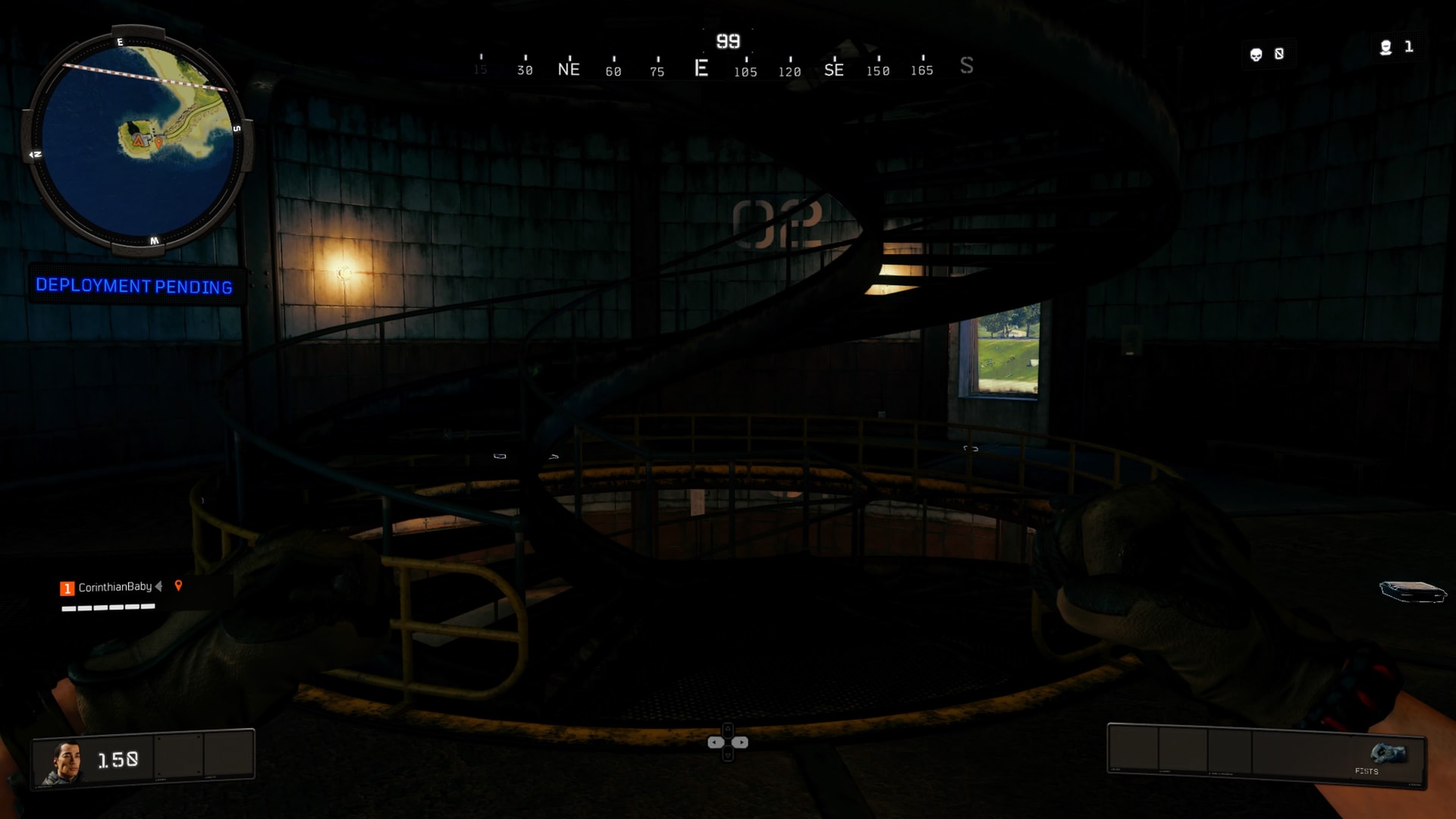
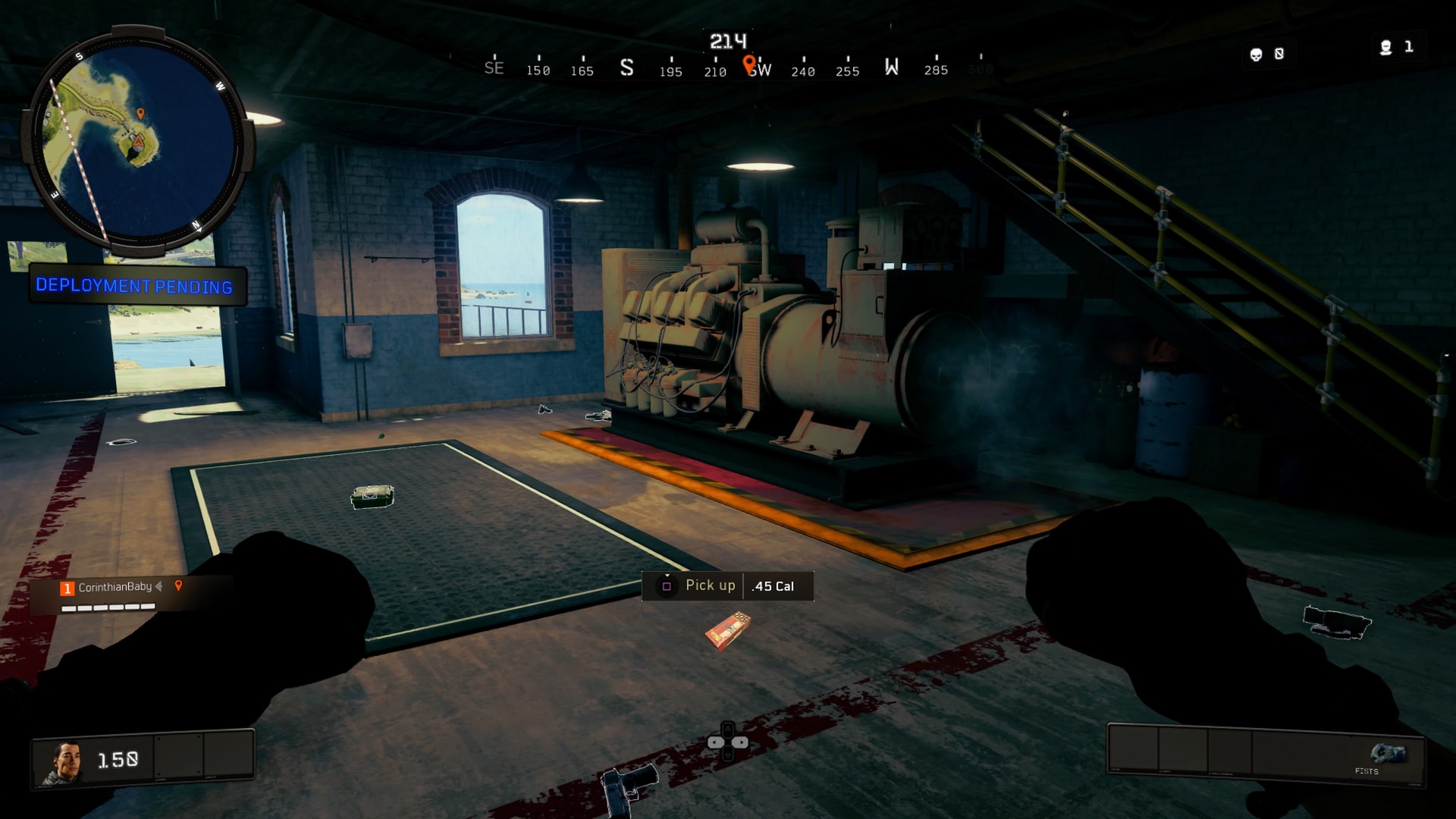
Where there was time, I painted a key image, anchoring the look across iteration cycles. I painted two for the lighthouse, the spiral staircase and generator room, and one for the factory’s exterior. Together those paintings helped make our case to the studio for the overall look of the mode. When time was even more limited, the work was finding the right reference, and the environment artists built from that and from assets we already had. We did a lot of paintovers of screenshots from the game to solve specific problems.
The reveal trailer went out in September with four of the locations I helped design in it. The train station and the hydro dam flash by at 0:14 and 0:15, Rivertown at 0:27, and the asylum gate shows up at 1:16.
Blackout shipped in October as the biggest map in the franchise’s history, and our two-person tag team had concepted most of it.
Lighthouse
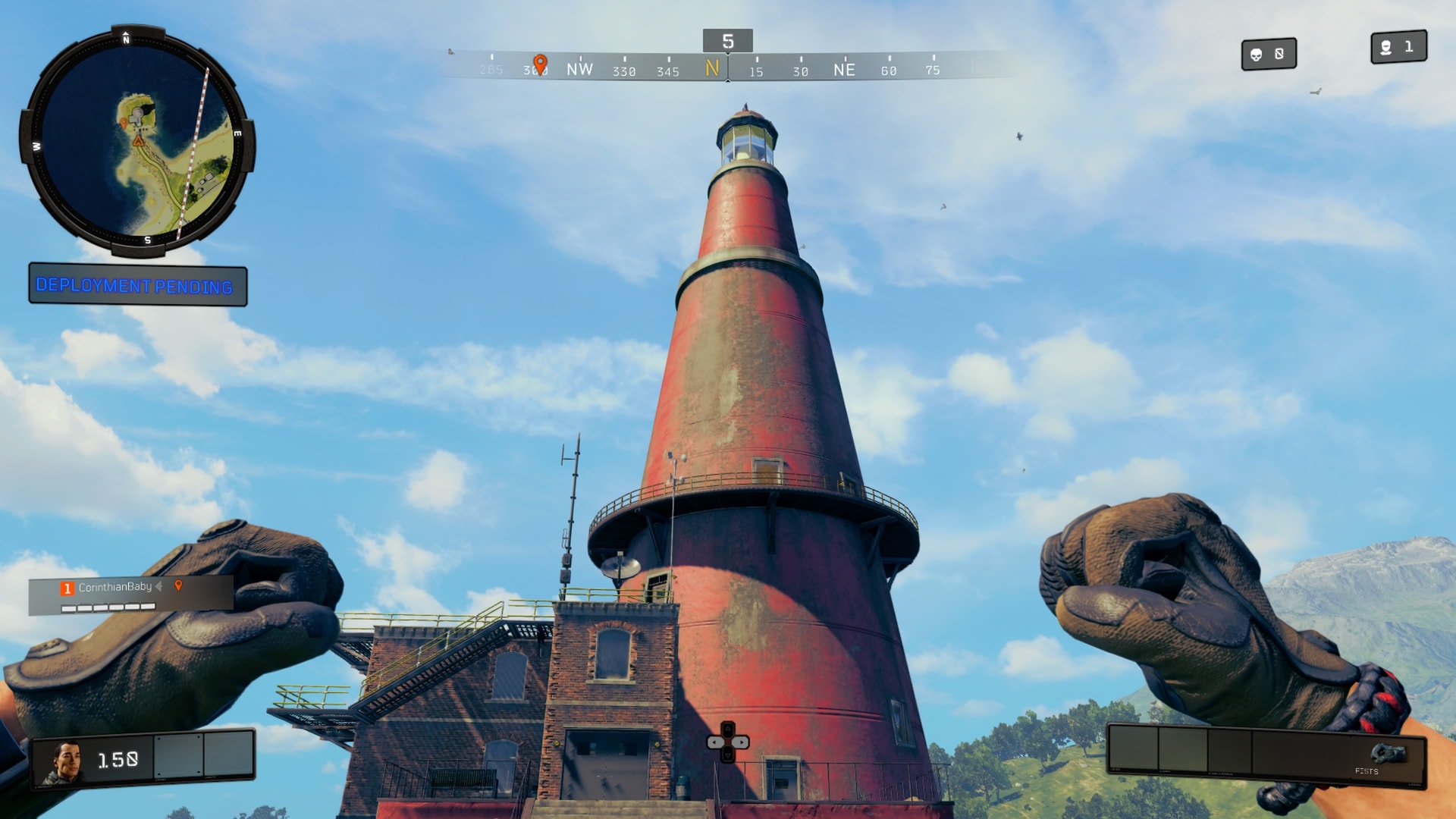
The lighthouse came from Call of the Dead, the Black Ops Zombies map, and the tower itself was the old asset remastered for the PS4. I helped design the water around it: where the river meets the ocean, and how the waves break onto the shore.
My first key image for the lighthouse was the spiral staircase. I wanted to induce a sense of vertigo as players climbed up to the sniper’s nest at the top. I was working in Modo at the time, which made the stairs hard to deform. One of our concept leads rebuilt them in 3ds Max, and I used them in my 3D scene, working off of the original concept art from the first Black Ops.
The generator room, my second key image, was largely self-directed, coming together in about a day. I pulled the models from our asset manager, the generator among them, and chose two-tone blue & white painted brick to set the room apart from the stairs. The fun was hunting down references that gave the space function so it would feel believable.
Factory
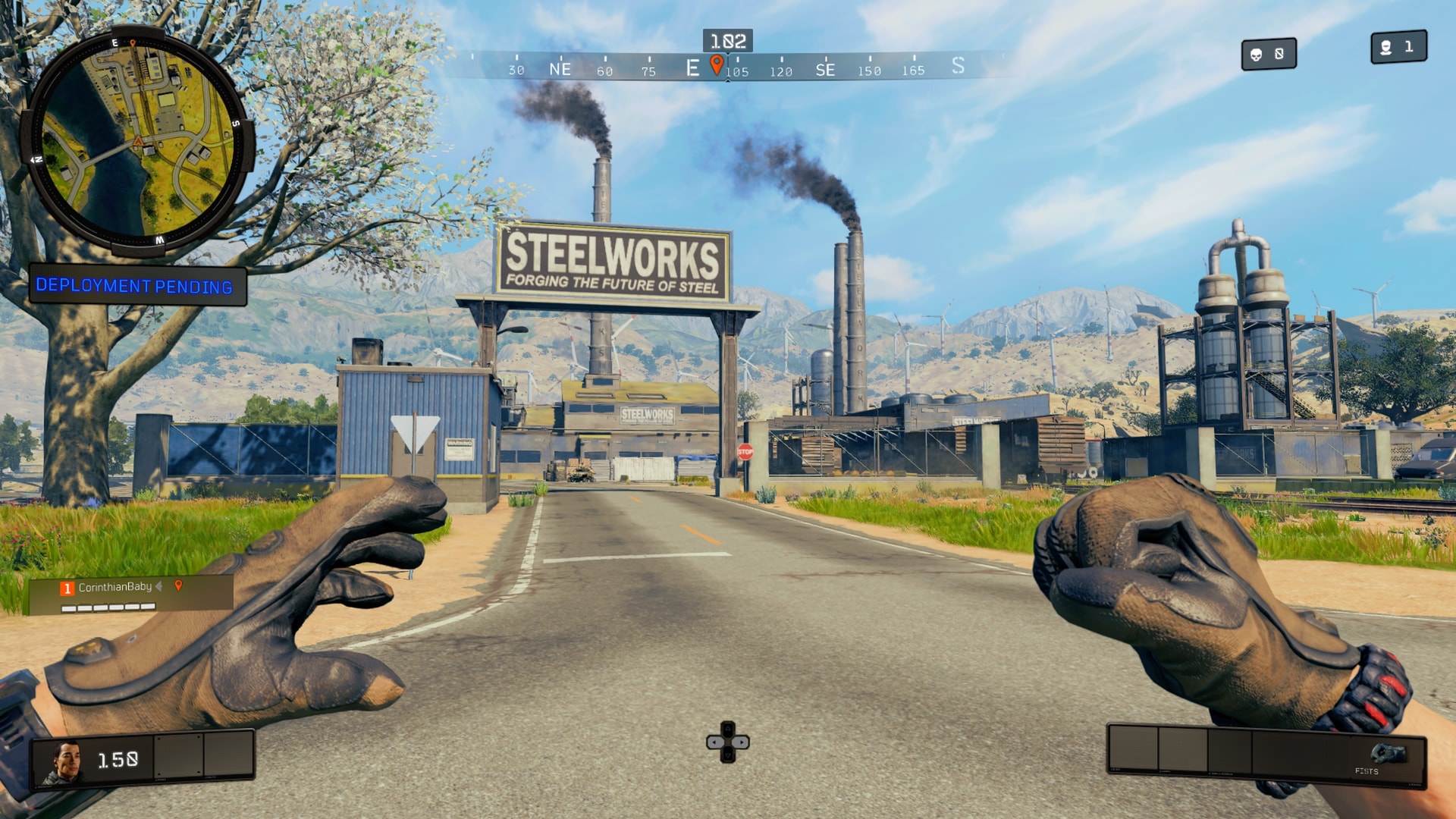
The factory was another key image, an in-engine paintover of the exterior. We made the corrugated roof yellow so it would read on the airdrop, and pop against the blue sky. The smokestacks gave it a nice silhouette players could pick out from a distance and head toward.
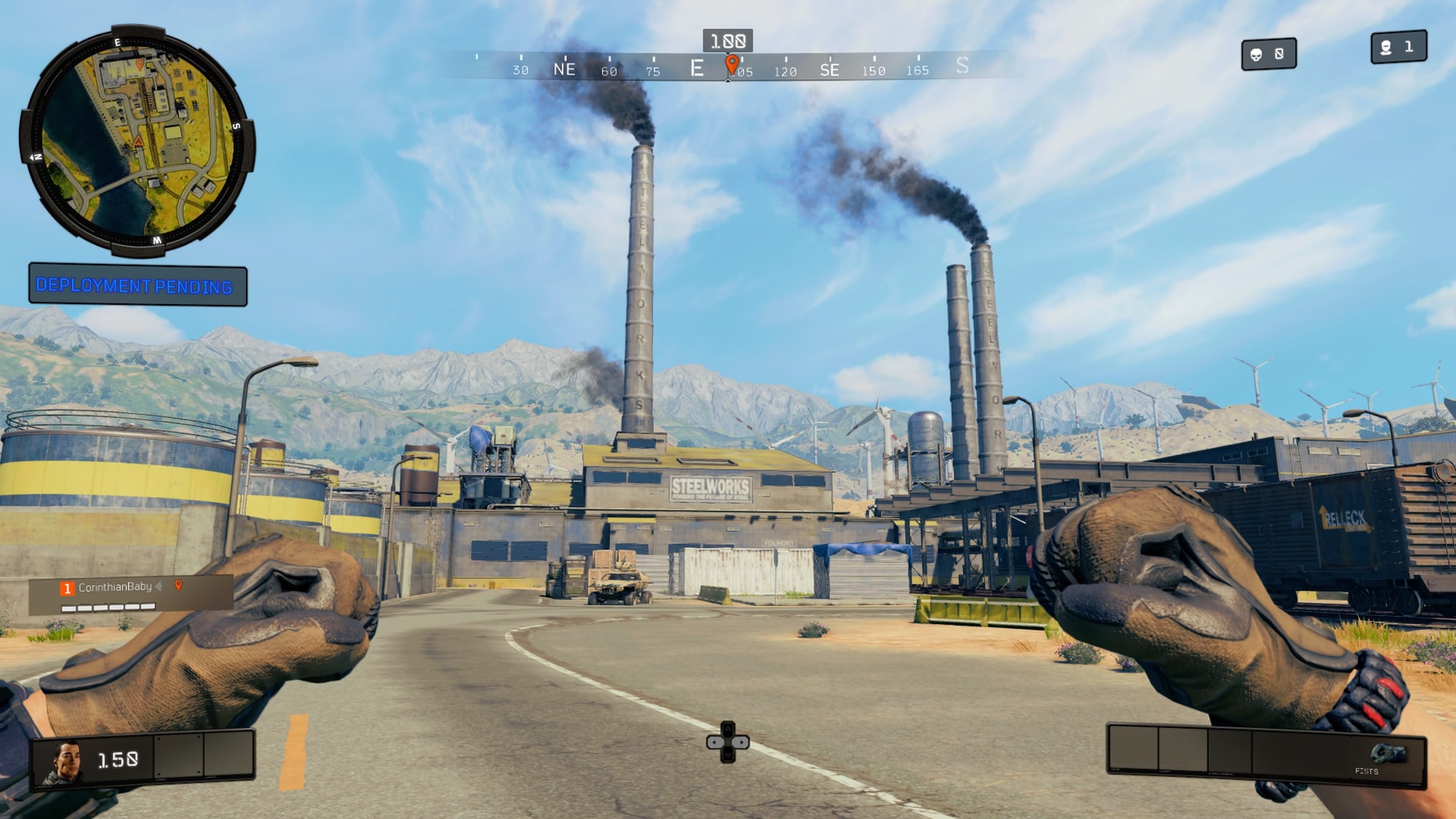
I named it Stricker Steelworks after Brandon Stricker, a friend and fellow concept artist. Legal struck the surname, but Steelworks stuck.
Hydro Dam
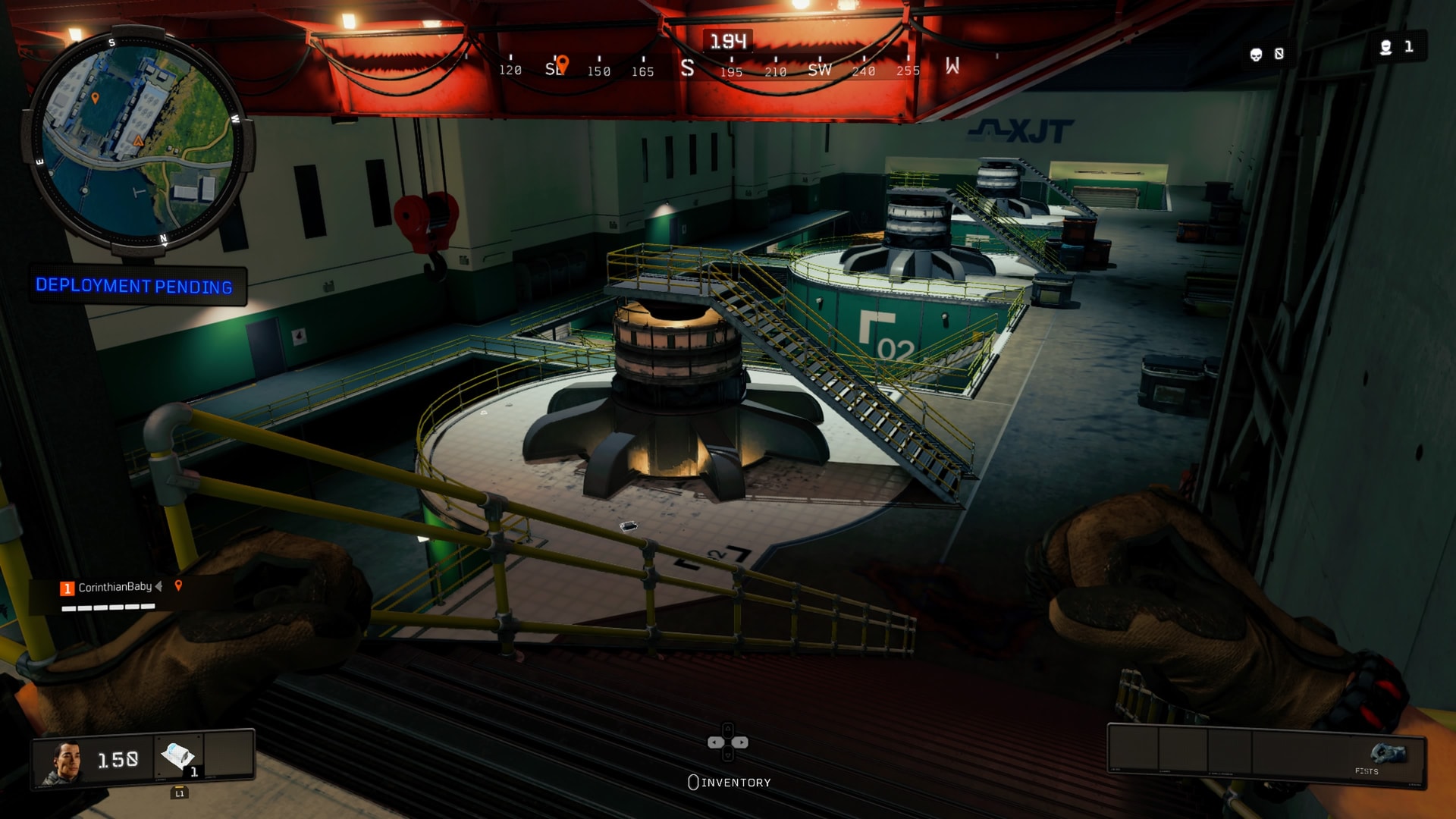
The hydro dam started as Hydro, a Black Ops II multiplayer map, and it came to Blackout late in development, with no time for a key image. I built the reference sheets and mood boards including some key features from the Hoover Dam. I added the sub pumps for believable infrastructure. The environment artists handled the rest using our library of assets.
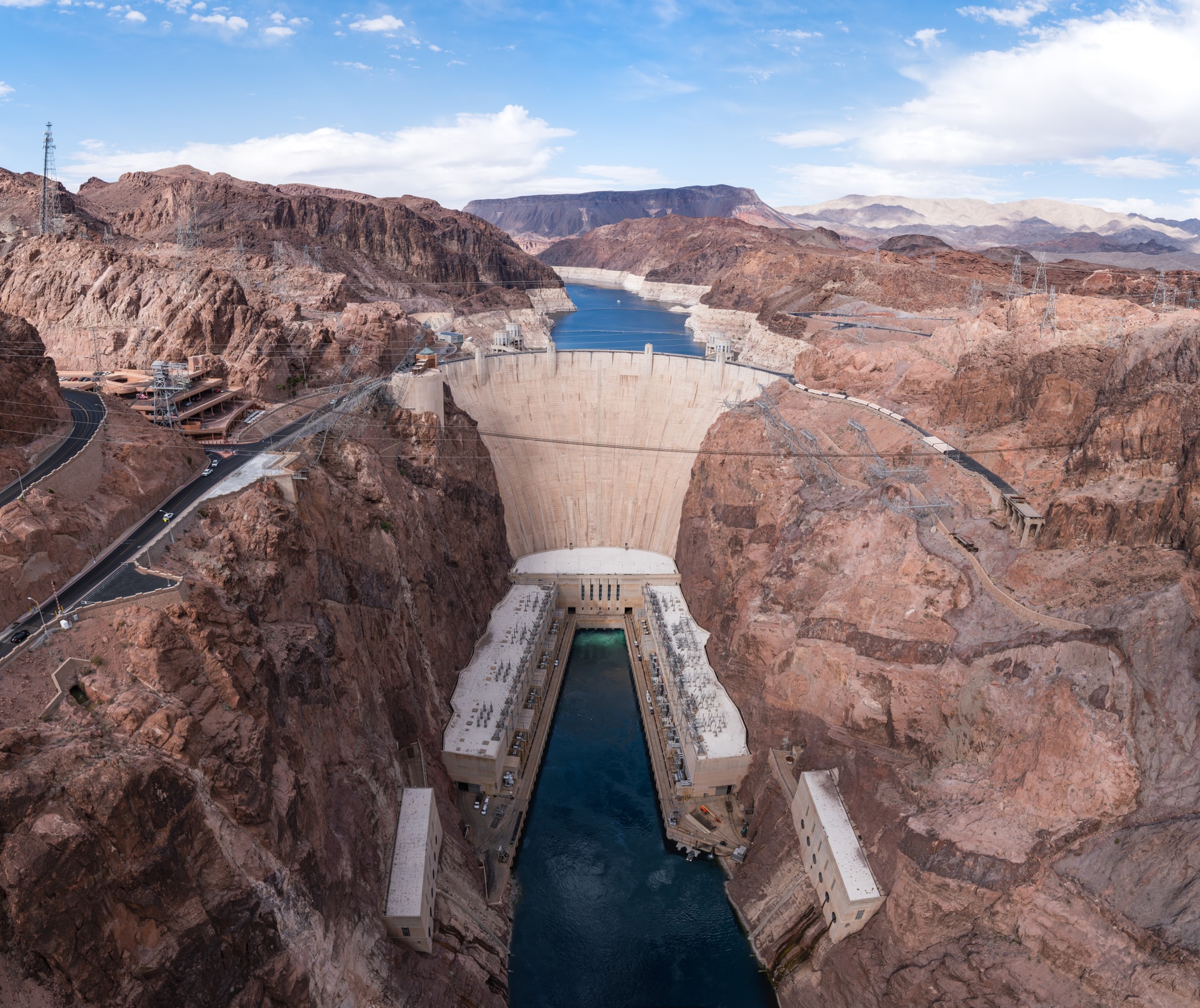
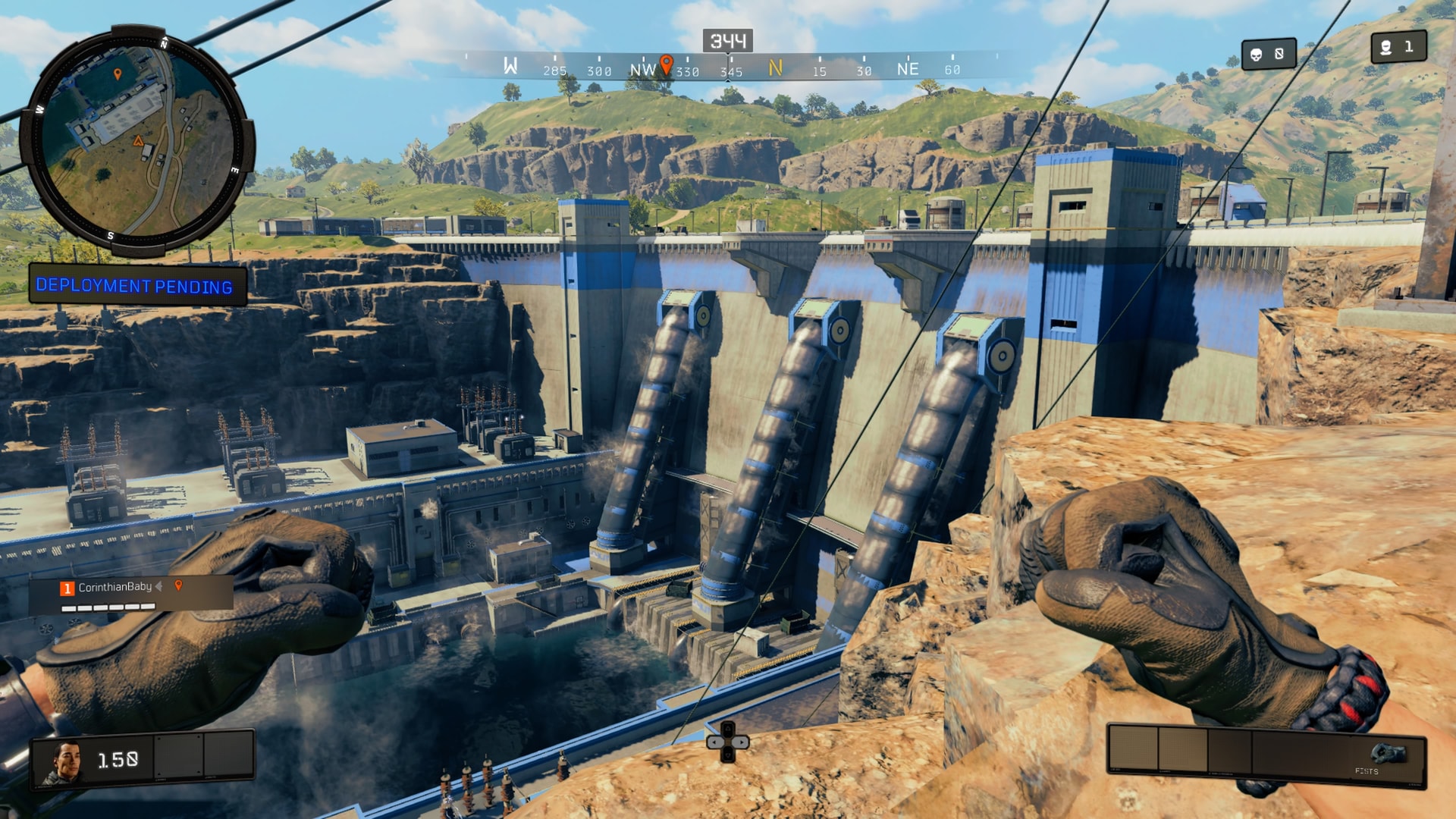
Inside, the turbine hall takes cues from the Hoover Dam.
Asylum
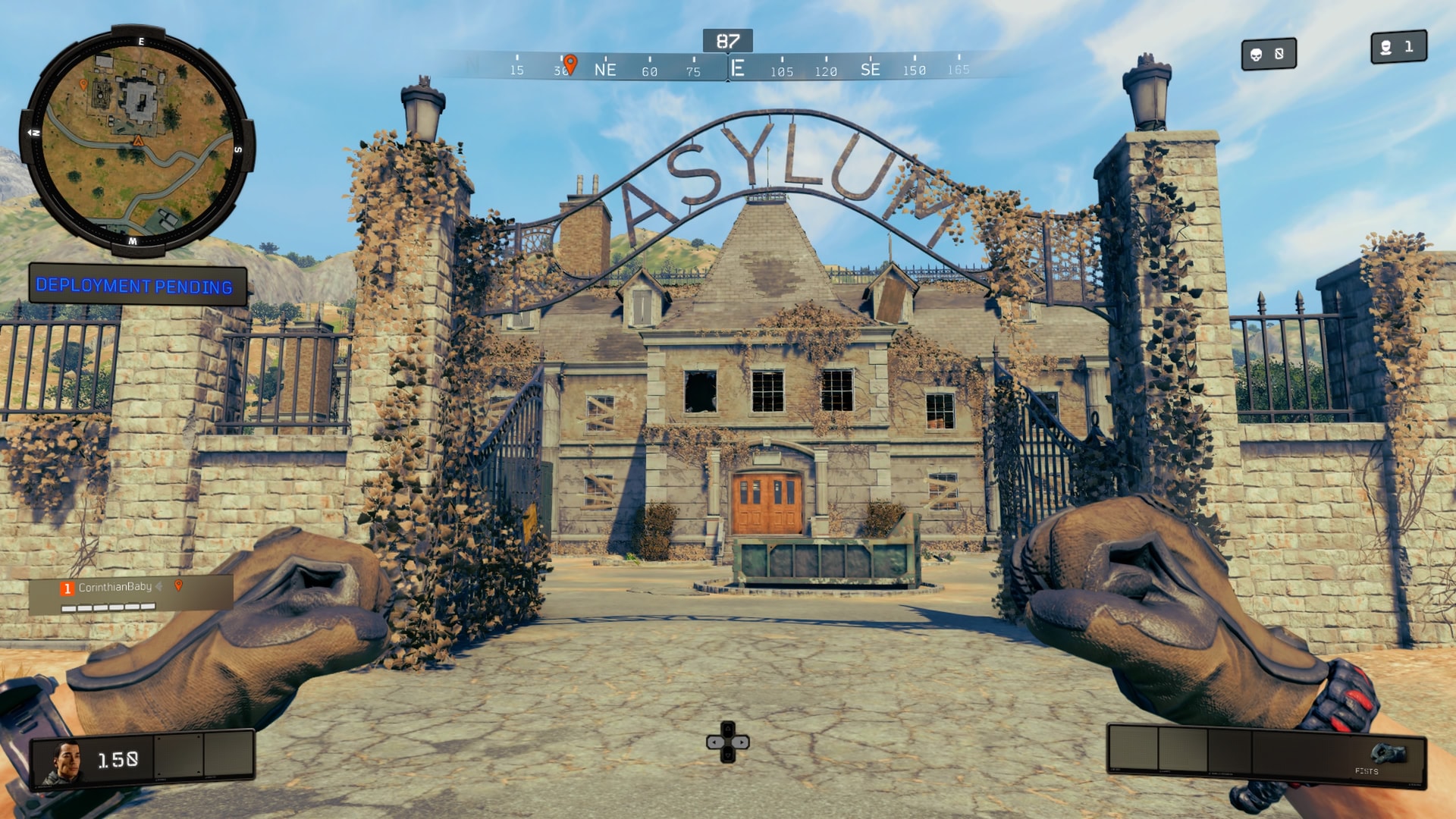
The asylum came from Verrückt, the World at War Zombies map that later showed up remastered in the first Black Ops. The one feature we were set on was the approach, a big hill with a winding road up to the gate. No one reference matched the exact vibe, so we photobashed our own for the environment artists, one asylum design collaged onto hillside roads. It was a Zombies location, so the hill, the road and the building all had to feel creepy and dangerous.
Rivertown
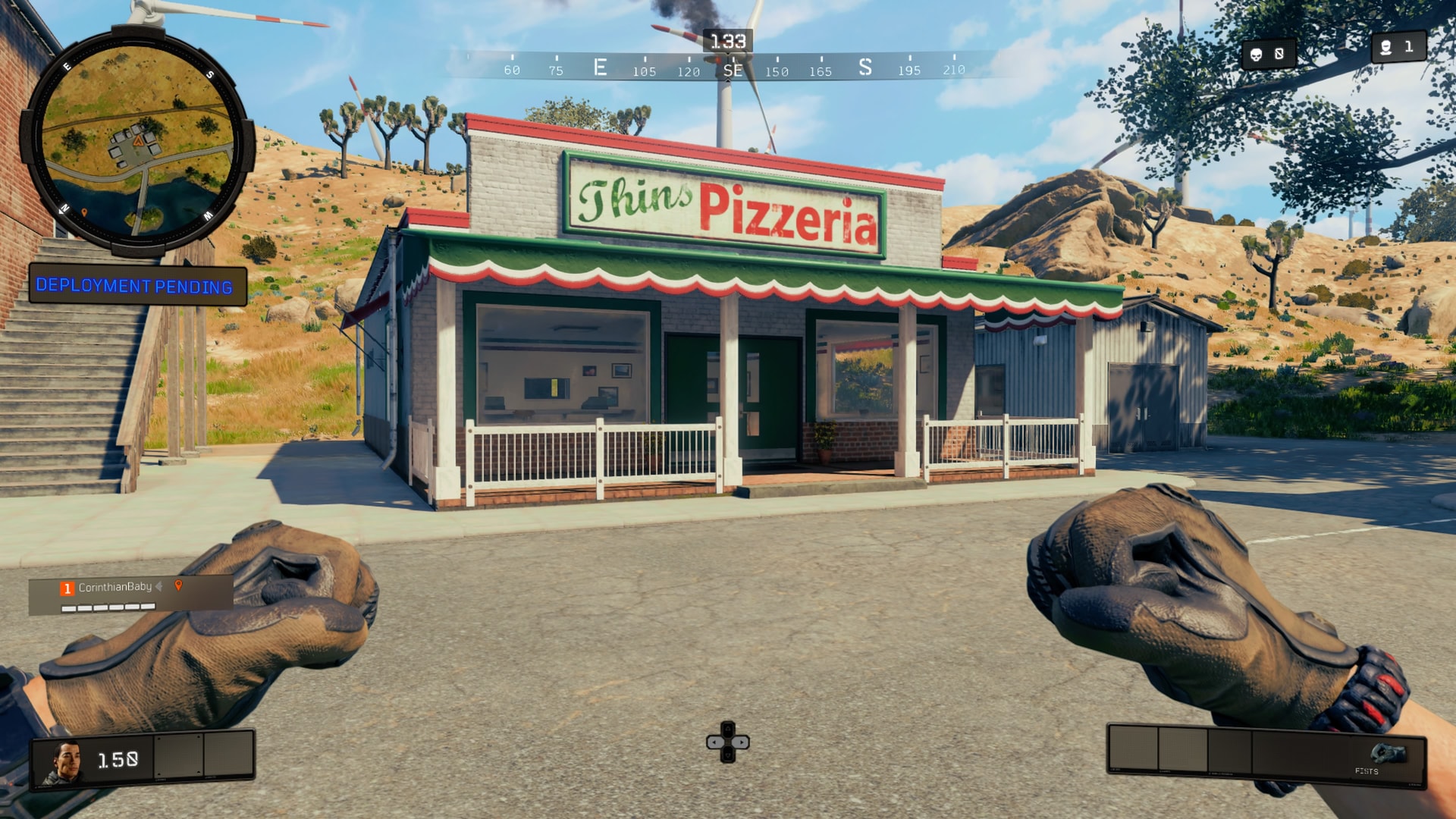
Rivertown came late too, remade from Fringe, a Black Ops III map, and I helped design the generic storefronts around it. A map of this size needs satellite buildings between the landmarks, places for low-tier loot and skirmishes on the outskirts. Every shop name had to be generic enough to pass Legal.
Zombies
As we got closer to launch and Blackout was further along, I moved over to the Zombies team.
Classified
Classified is a remaster of Five from the original Black Ops, so the layout and the gameplay were a given, and what we added was visual storytelling. I did lighting paintovers and redlines, and designed the set dressing: vignettes that steer players through this labyrinth of a level. The map takes place in the Pentagon, so everything had to feel believable as an office space, complete with a secret lab in the basement. The strewn papers, the broken glass, the extra blood and the general dilapidation all started as redlines.
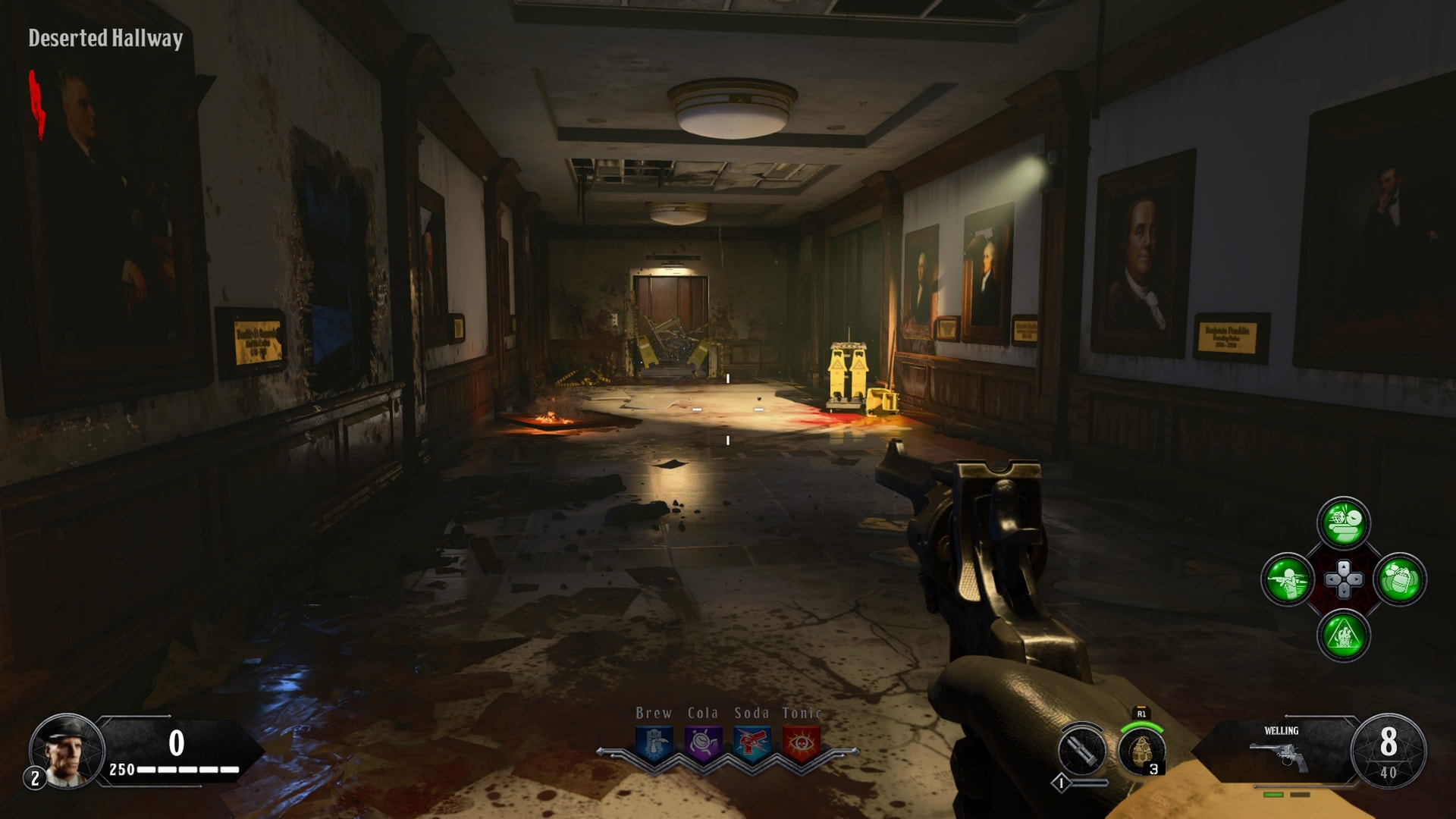
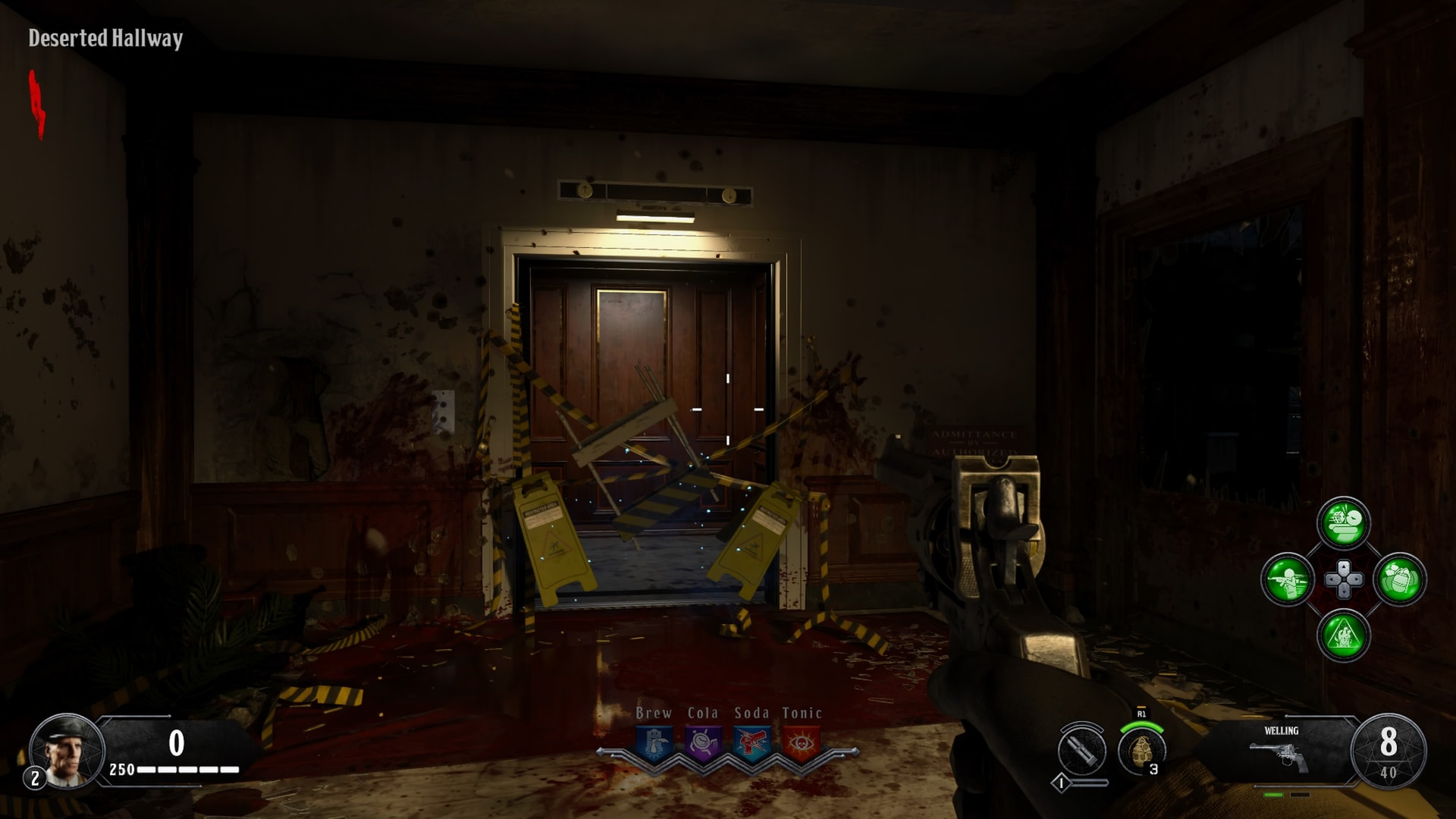
I also designed the look of the wall buys, the barriers that gate off parts of the map, and leaned into the mode’s fantasy genre. Caution tape and wet-floor signs are tangled up with chairs, buckets and tables, with particles holding the everyday mess together with magic.
Shadowman
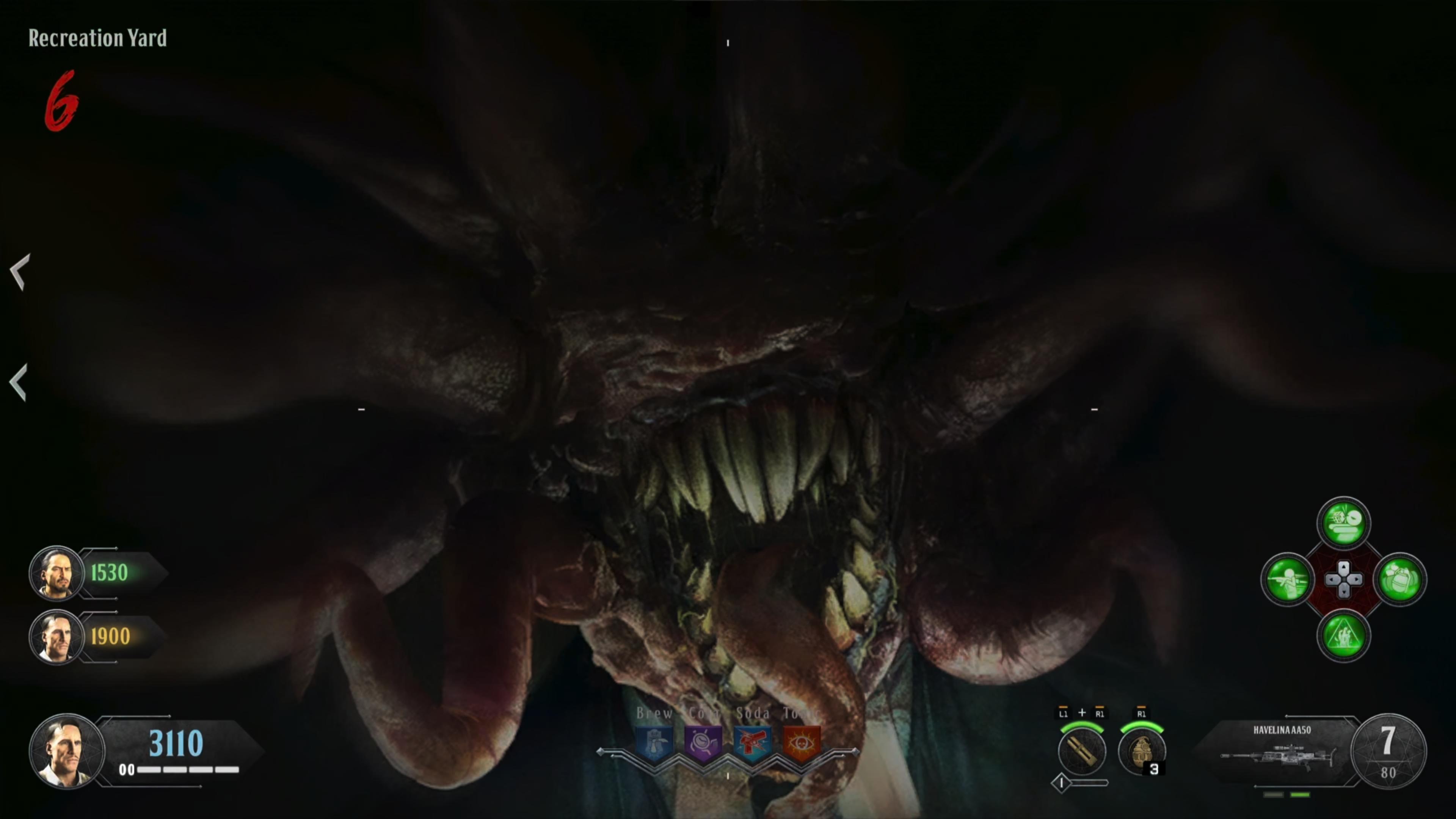
For Blood of the Dead I painted the Shadowman jump scare. Aim down the scope of a sniper on one spot in the Recreation Yard and his face fills the screen with a scream. His old model from the earlier games was basic and needed detail to sell the fear. I rendered it in Modo and painted over it, fleshing out the slimy tentacles from a photo pack. The teeth and the winding tongue I pushed further, with Marvel’s Venom in mind, and I gave the specularity and the saliva the same care. Our concept lead on Zombies directed the effects on top, the amount of zoom blur and the Dutch angle. Once it cleared Legal, the painting went into the game as is.
My time at Treyarch ended that September, and I stayed on Black Ops 4 Zombies externally, through Gadget-Bot Productions. There I did environment concepts, rapid sketches, VFX designs and architectural 3D renders for the fantasy side of the mode.
Joining the internal concept team at Treyarch was like going to school for gamedev. In a matter of months I went from small freelance gigs to a shipped AAA title, on the series I grew up playing, with the locations I designed in the reveal trailer. We had a Black Ops 4 booth at E3 in 2018, and people lined up to play our game for the first time. I’d always watched E3 from home in Boston; seeing the fan response in person was life changing.
To the concept team and the art directors who taught me so much in those 7 months, thank you. The names below are a fraction of the overall Black Ops 4 team.
Art Direction
- Alan Jarvie
- Bruce Hall
- Ken Harsha
- Shaun Bell
Concept Leads
- Daniel Cheng
- Jason Louie
- Khan Pham
- Peter Lam
Concept Team
- Aaron Kohn
- Ace Carman
- Chris Miller
- Hakob Minasian
- Hemal Patel
- Ji-hye Lee
- Jonathan Guzi
- Jose Borges
- Kevin Jick
- Michael Lacek
- Mickie Camua
- Mike Garn
- Quentin Stipp
- Yefim Kligerman