Perfect Dark
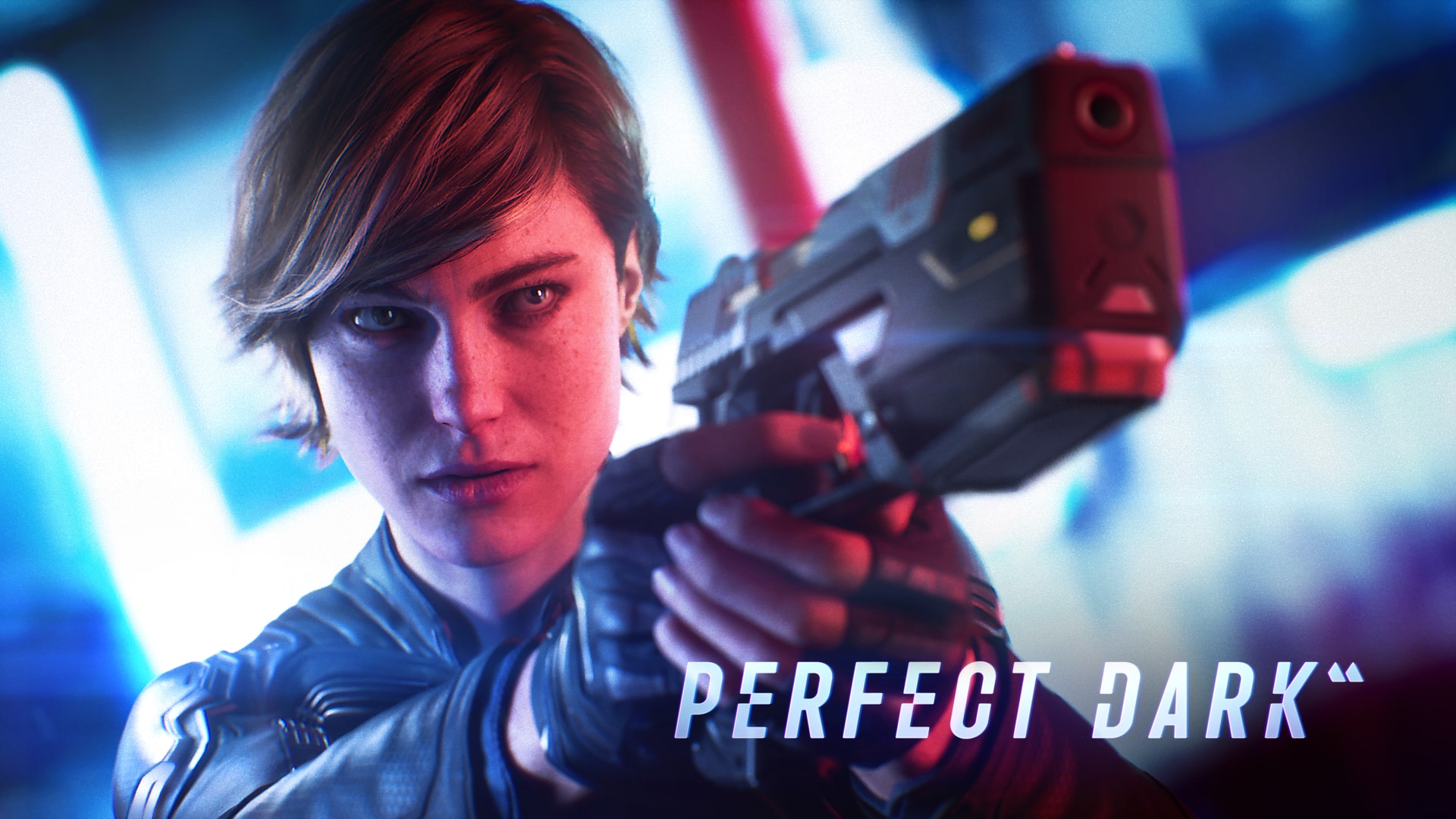
I was the first concept artist hired in-house on Perfect Dark, at The Initiative, the studio Xbox opened in Santa Monica in 2018. That fall I kickstarted our world-building: a near-future Cairo for a spy thriller, with a look of our own, which we came to call “eco sci-fi.” For someone who grew up on Shadowrun and William Gibson, it was a pinch-yourself moment.
I was there from the blue-sky pitches in 2018 until Microsoft closed the studio in 2025. Over those 7 years the team around me grew and changed, with my tenure one of the few constants. I became the keeper of our concept vault and the resident historian of the game’s lore, the one who brought new hires up to speed on a world that had been evolving for years. When a colleague was given an assignment, I could hand them our earlier iterations on similar themes as reference. When an art director was preparing a new brief, they could check with me to see if we’d explored the topic before. (The answer was almost always an emphatic yes.)
We announced the game at The Game Awards in 2020, and from 2021 Crystal Dynamics co-developed it with us under one banner, Team Perfect Dark. Between that announcement and the gameplay reveal at the Xbox Games Showcase in 2024, I owned the source art for the game’s AR graphics: the obsession board and the hacking animations you can see in that trailer. I also delivered street signage and holograms, dashboards and login screens, collectibles, and screen textures across the levels.
Announcement Trailer
In 2018, the reboot had a name and a protagonist, Joanna Dark, but no world. The original Perfect Dark was closer to Blade Runner, but we couldn’t out–Blade Runner a game like Cyberpunk 2077, so we had to try something else. I started as I always do, with a genre deep dive. I watched every Mission: Impossible and Bond film, and replayed both original Perfect Dark games. Once I was steeped in the design language of the spy thriller, I went wide with my research, then started sketching: around 3 rough photobashed sketches a day, each a pitch hunting for a flavor we could build on. I felt like a mad scientist, experimenting with wild ideas until the early wins came.
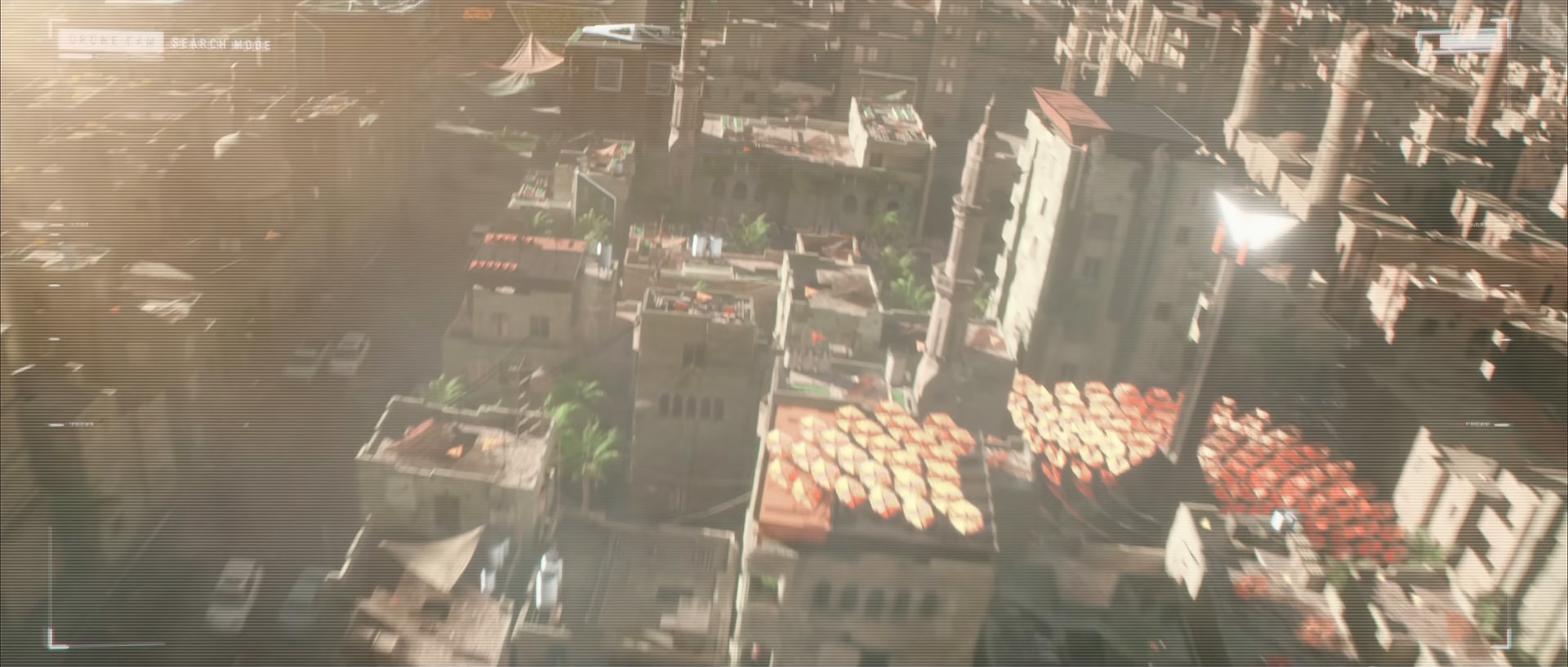
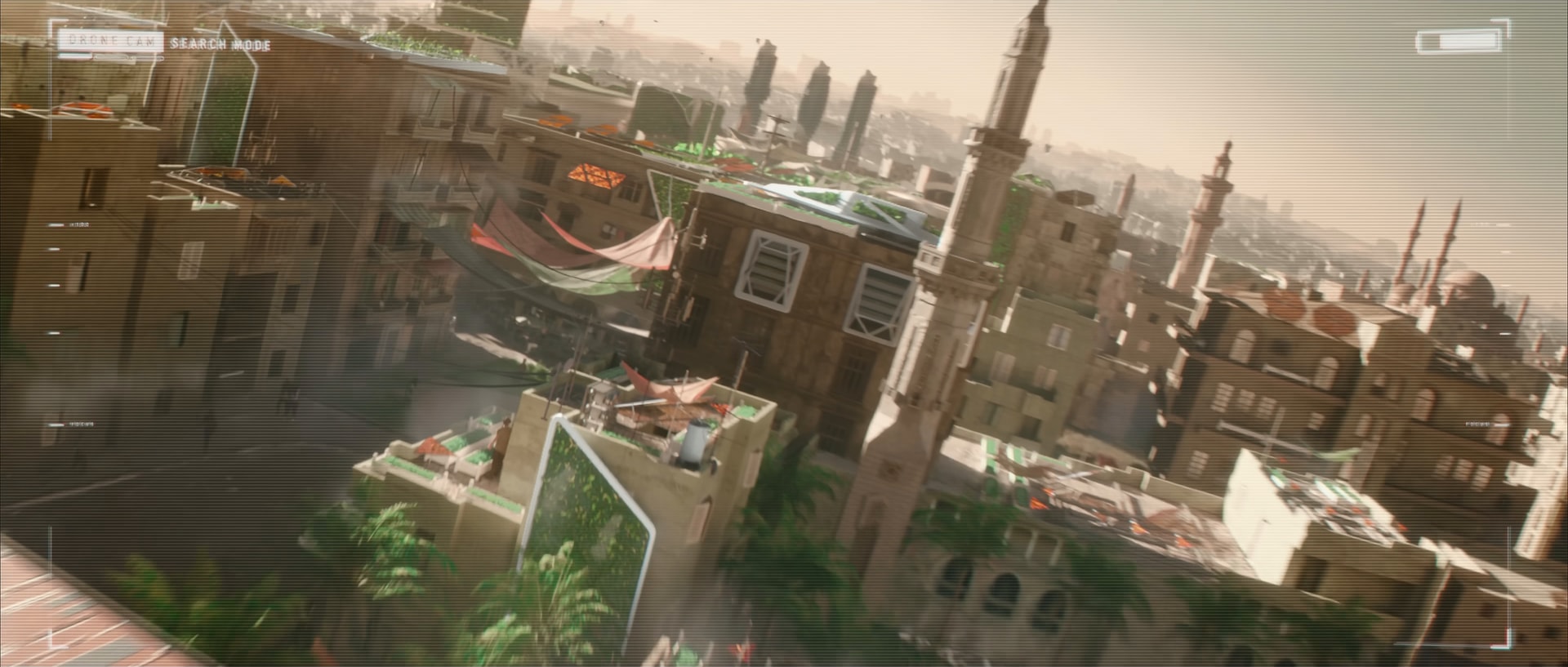
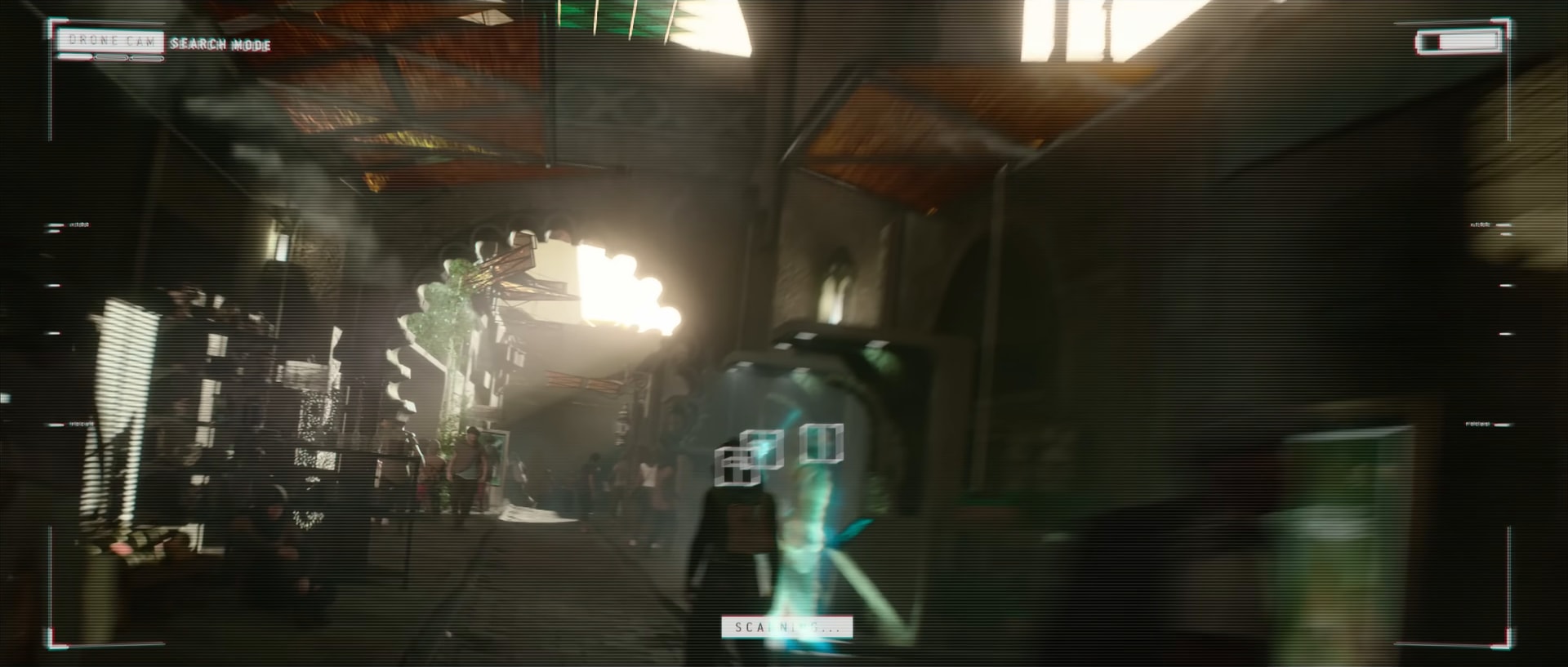
From those wins, I worked out the formula with our studio head and the team: a Cairo shaped by ecological disaster, forced to remake its infrastructure to survive climate change. We called the look eco sci-fi. The new tech is retrofitted, so a destination you’d recognize sits in contrast with corporate futurism, old against new (a “fauxtopia”). The goal was something ownable, the way Black Panther made Afrofuturism its own with a city drawn from vernacular African architecture. I designed the style guides that followed and worked with a cultural consultant to keep our Cairo true to the real one, down to the translated text in my concepts.
In 2020, two years of that work went public in one trailer, the first time anyone outside the studio saw the setting. It was our stake in the ground: a bold claim that this world was a flavor of sci-fi nobody else had, and our way of standing out in a sea of near-future games. My work is in the drone’s flythrough over the market (1:44) and down in its streets (1:54).
Gameplay Reveal
By 2024 it was time to show gameplay. The reveal below is six years of world-building expressed in three and a half minutes, our concepts in motion at last. Typically, Concept Art paints the look and Environment Art builds it in-engine, but on this trailer I did much of my design work inside Unreal Engine 5, painting over test levels and blockouts before I finished the keyframes in Photoshop. My contributions follow in order of appearance.
Storm Jump
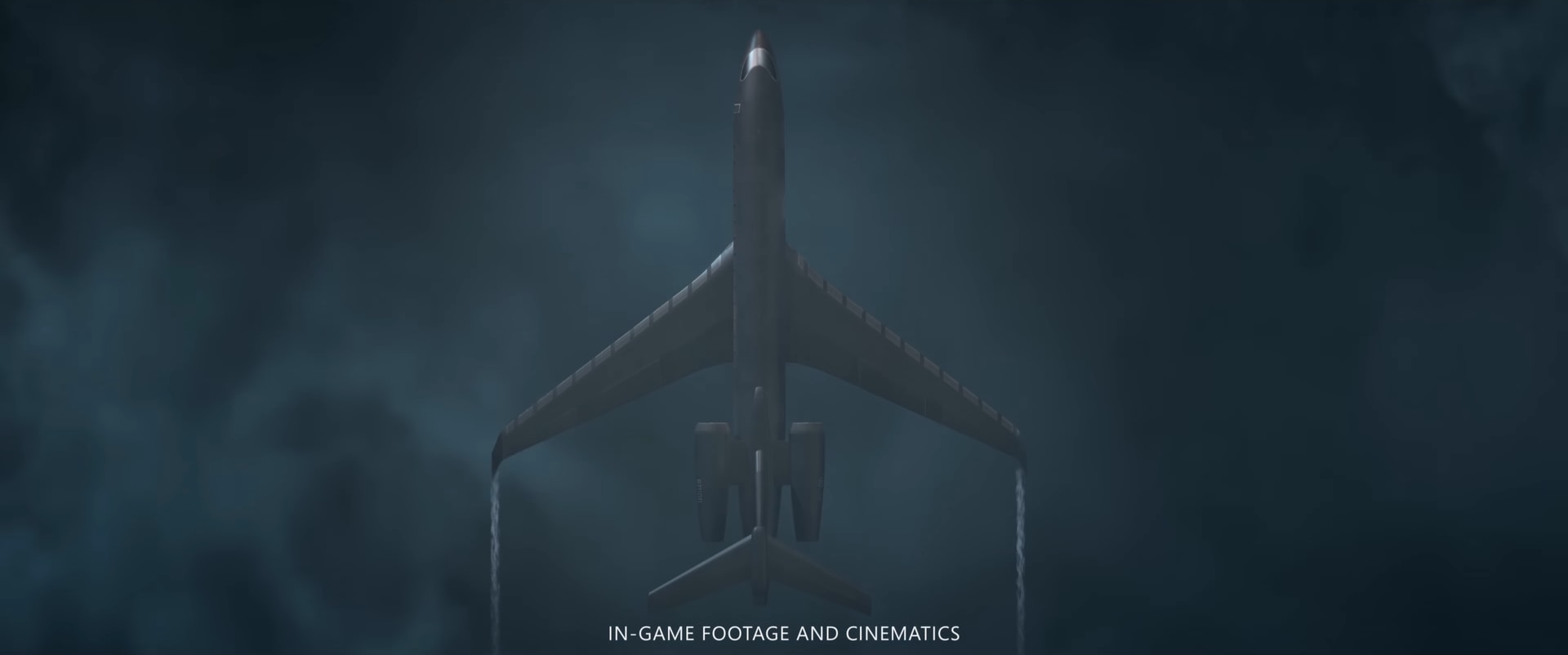
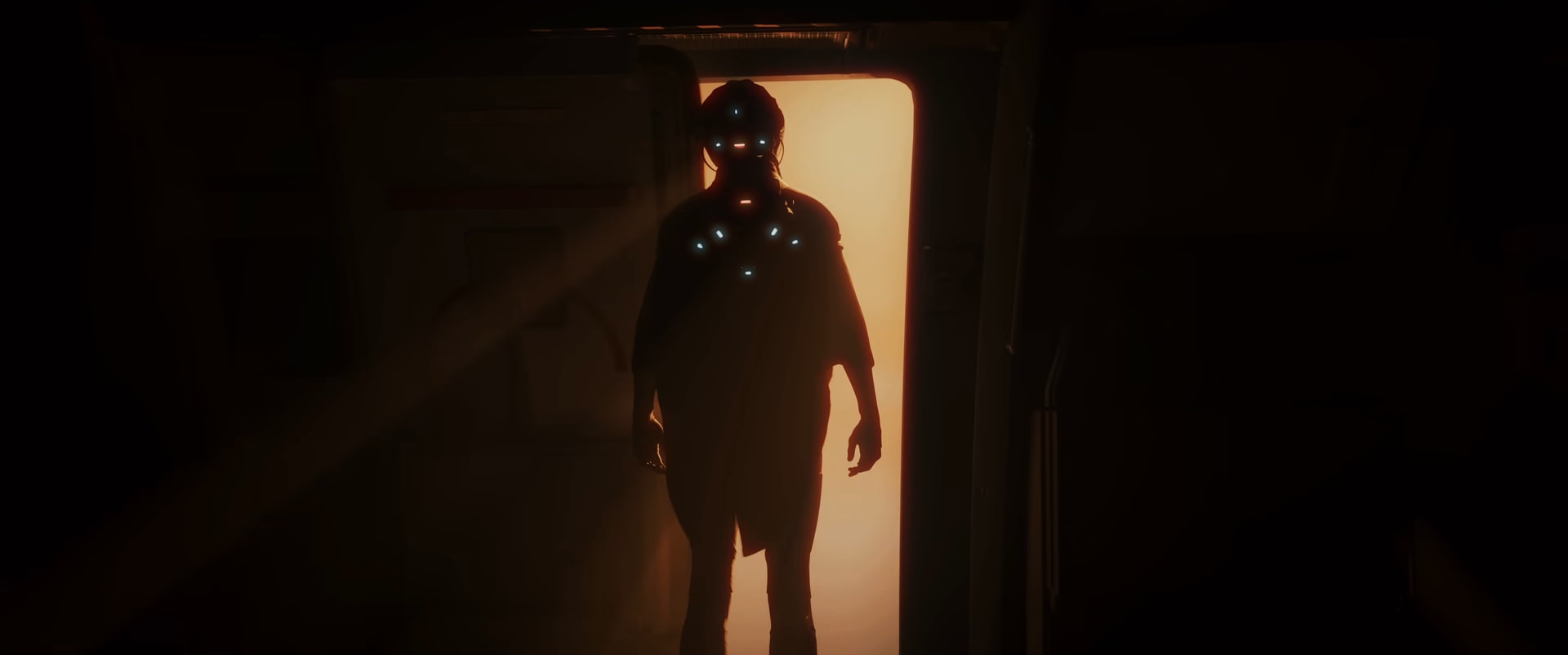
The trailer opens with a Mission: Impossible–esque stunt, Joanna’s death-defying jump from a private jet into a storm. A few seconds of screen time took concept, storyboards, character, level design, and cinematics to pull off. The hardest part was making sure the level designers and the cinematics team each got what they needed out of the story beat. The jet is my design, interior and exterior, and the trailer shows both. I argued for designing the exterior first, so everything would line up as a whole, and that solved some major problems: what kind of door the jet needed, how it opened, where on the fuselage it had to sit. My lighting and VFX concepts took the storyboard frames, rough and sketchy by design, and gave them polish. I posed our Joanna model, rendered her out in Blender, and painted over the render to set the storm’s fog density, the way it diffused light, the surrounding debris, and the color of the lightning strikes. The shot of her silhouetted in the open door was my idea.
Green Wall
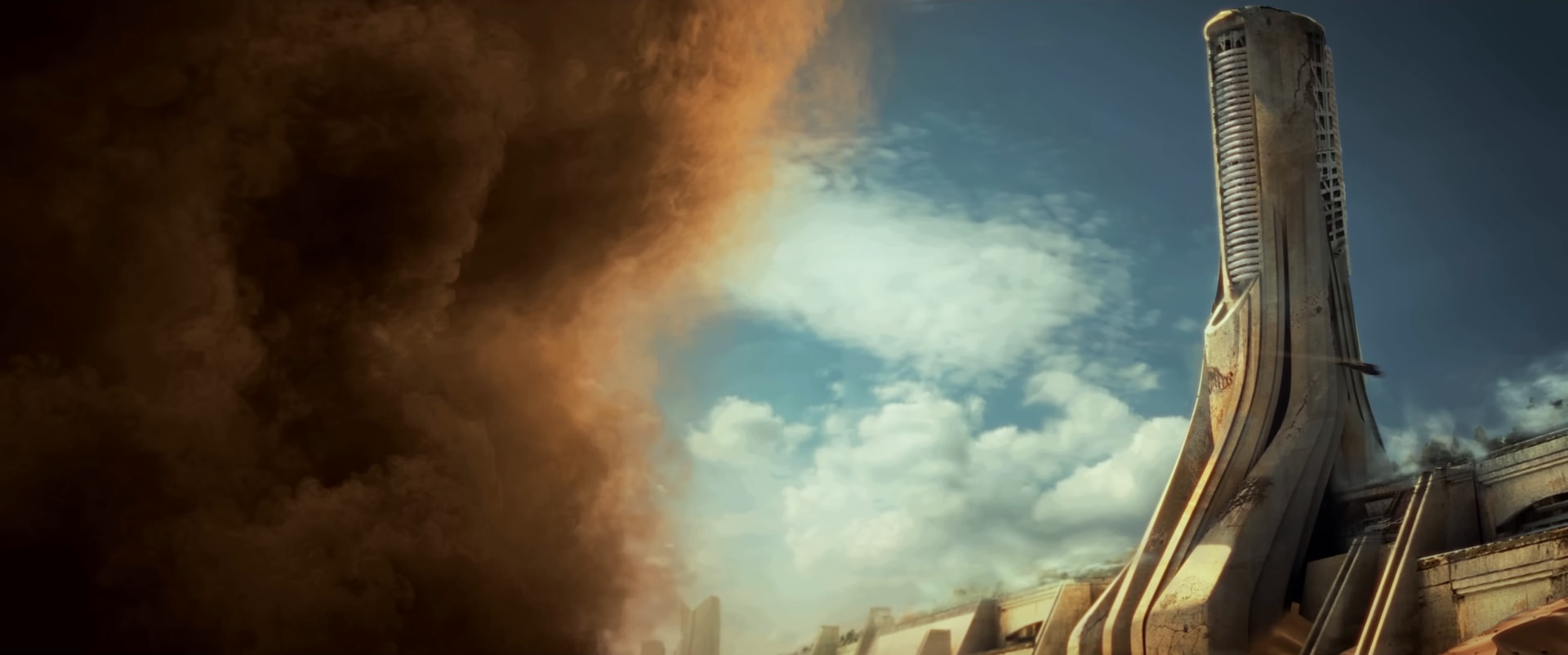
The storm breaks over the green wall, the large-scale infrastructure of our Cairo. The wall protects the city from the frequent sandstorms, and its dense artificial foliage keeps the temperature down. The idea began with our principal world builder; I designed the first version, and a fellow concept artist took it from there. In the trailer it is the first piece of the city on screen, seen from behind as the storm hits.
Voice Steal
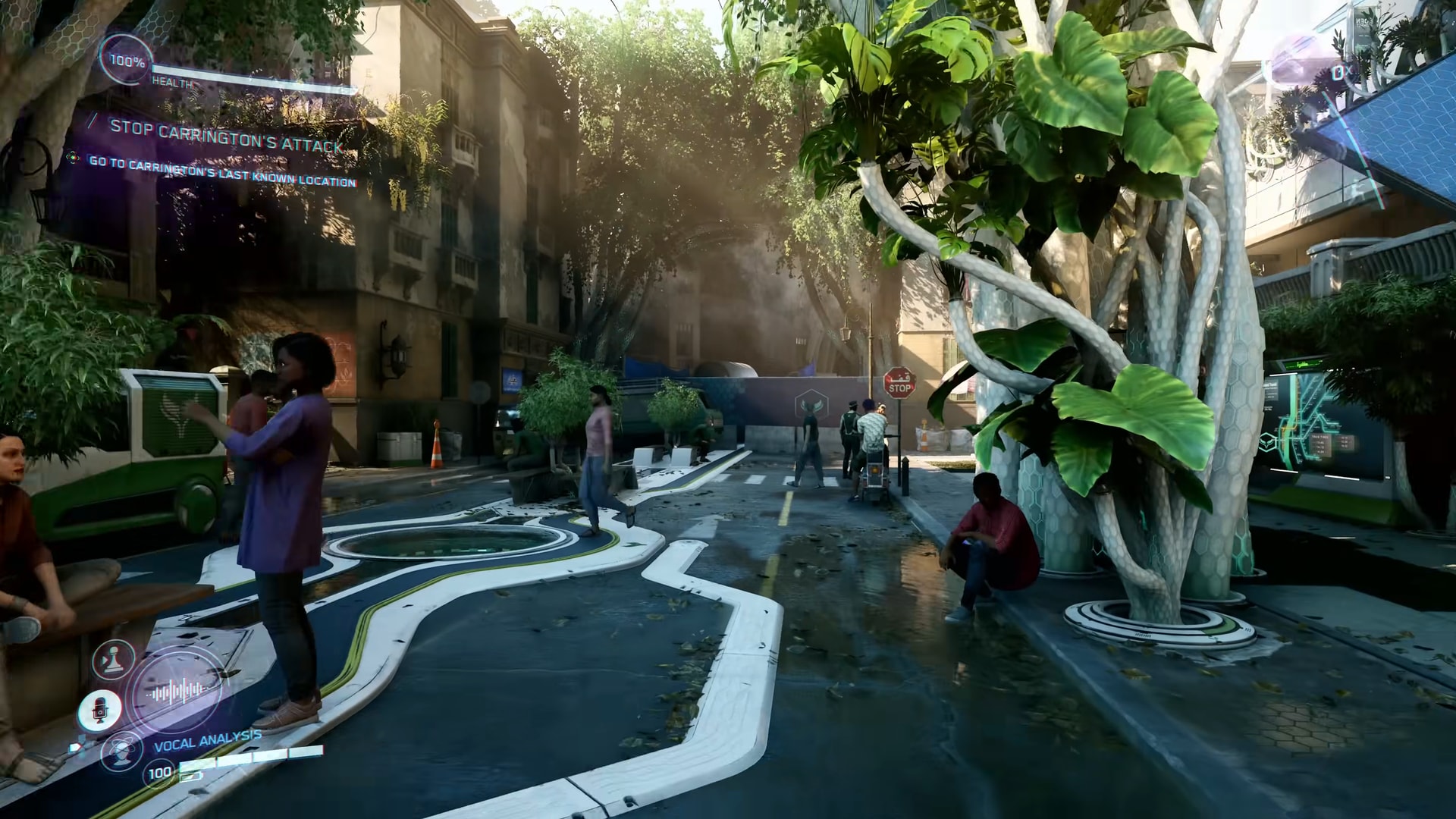
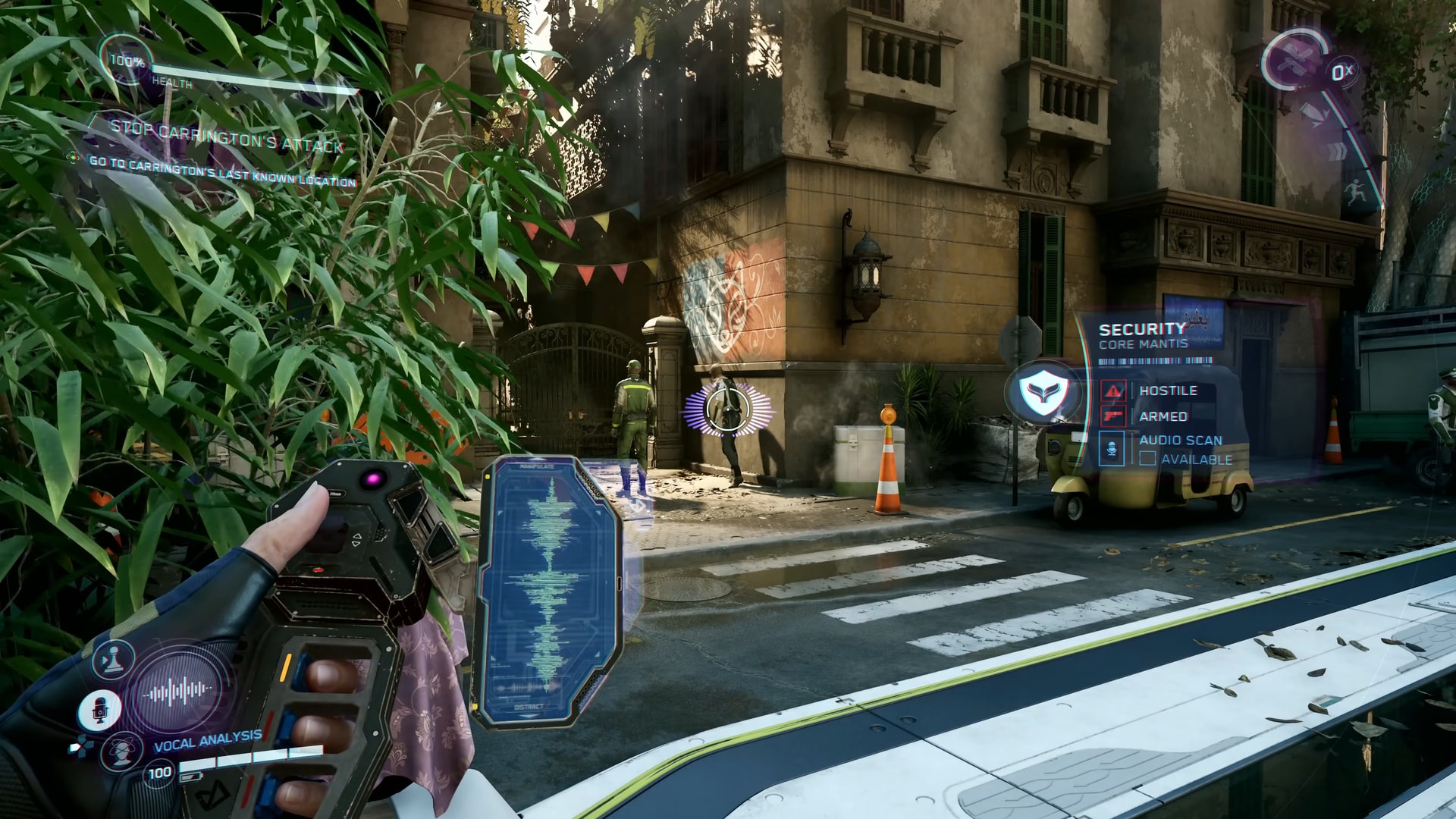
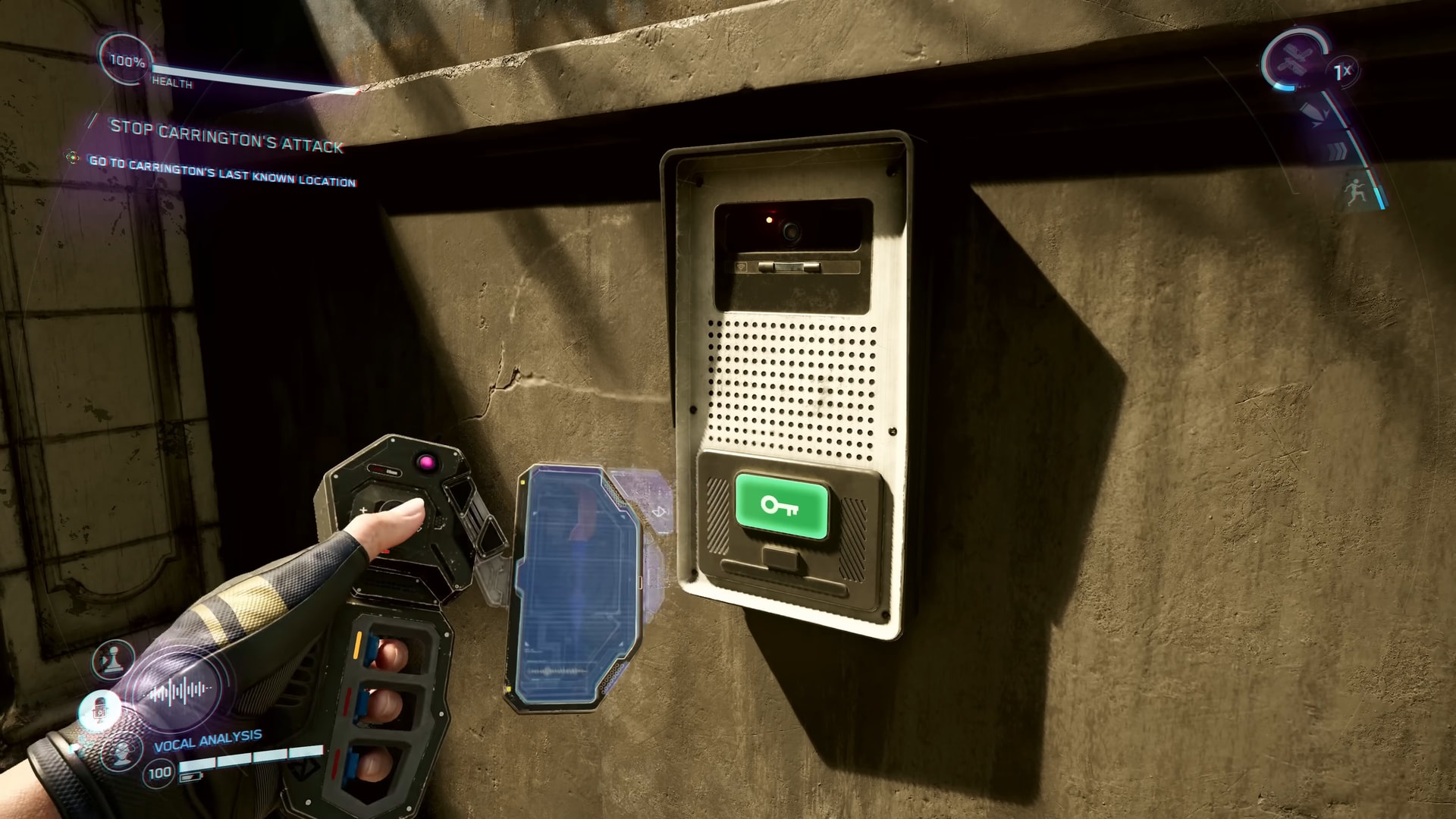
Joanna steals a guard’s voice to slip past a gate. I designed the gate and the voice box that opens it, along with many of the game’s systemic interactable props, hackable doors among them.
Alleyway
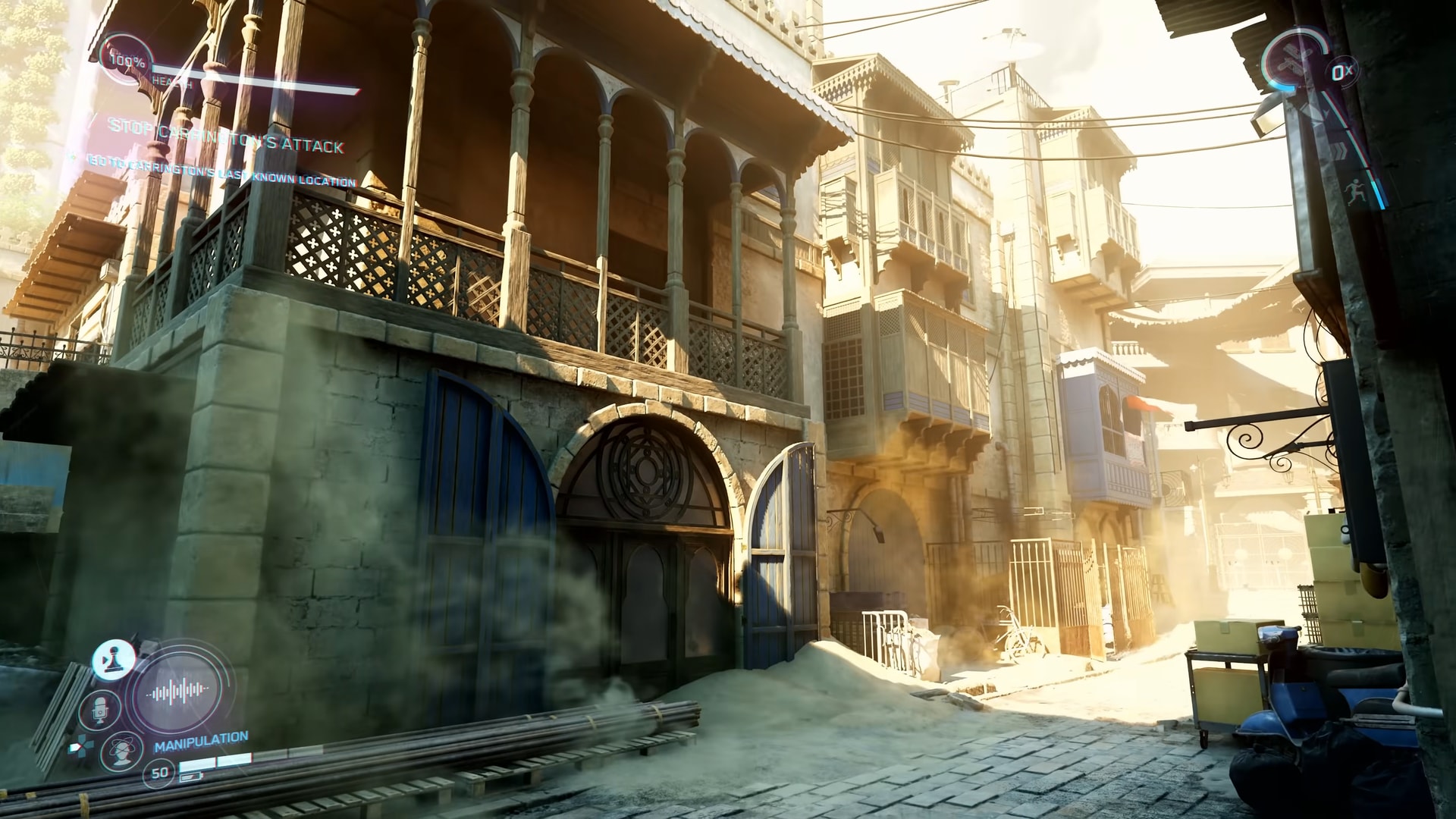
The next beat shows off our traversal moves in the alleyway behind Carrington’s hideout. I painted the keyframes, and designed the 2D textures for the signage and diagnostic screens. I also helped set the visual language for traversable objects, so traversal reads the same from level to level: yellow on the pipes and turquoise on the painted wood, to pop against Cairo’s earth tones. A red tapestry blowing in the wind marks a traversable window.
Hideout
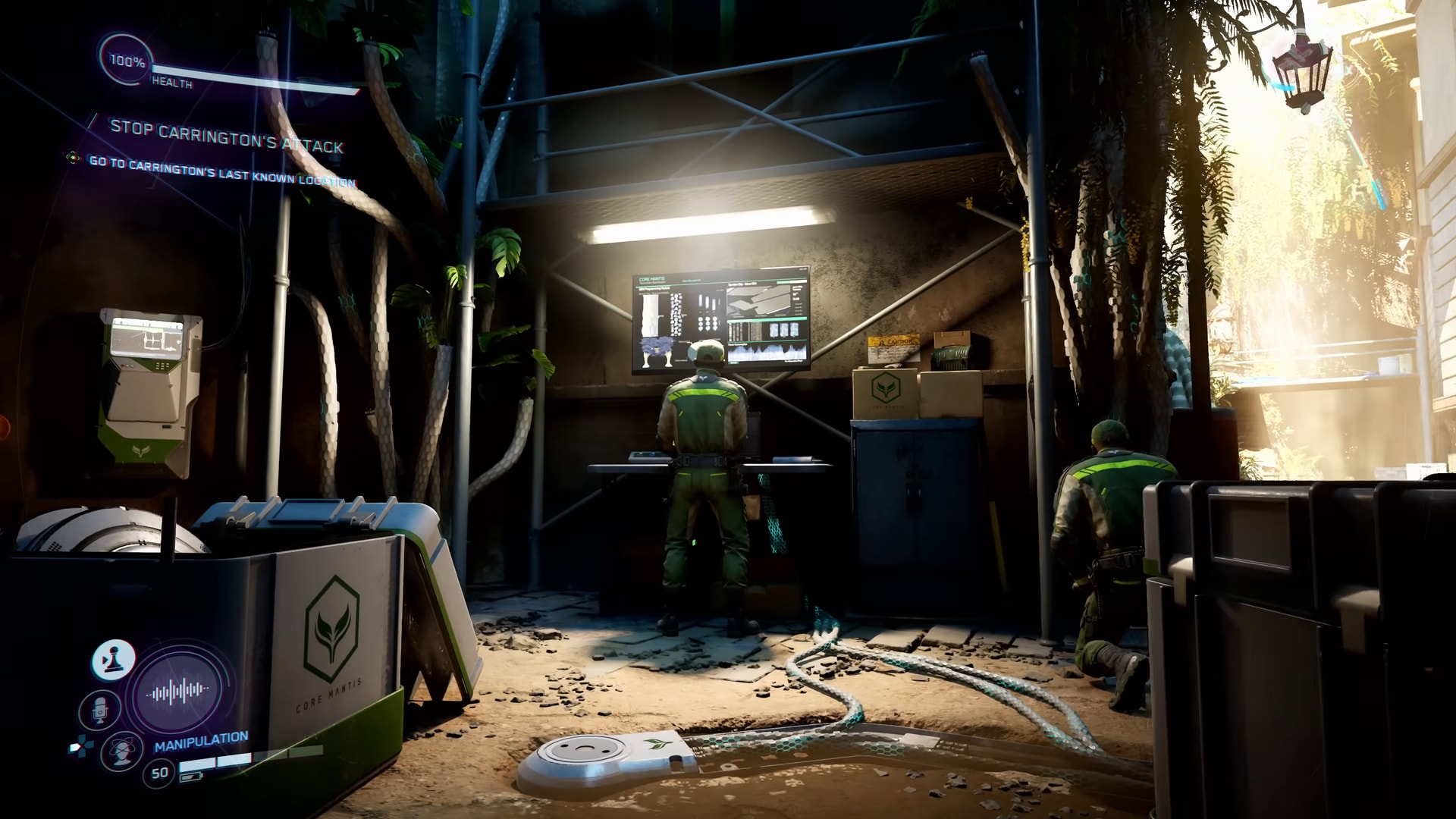
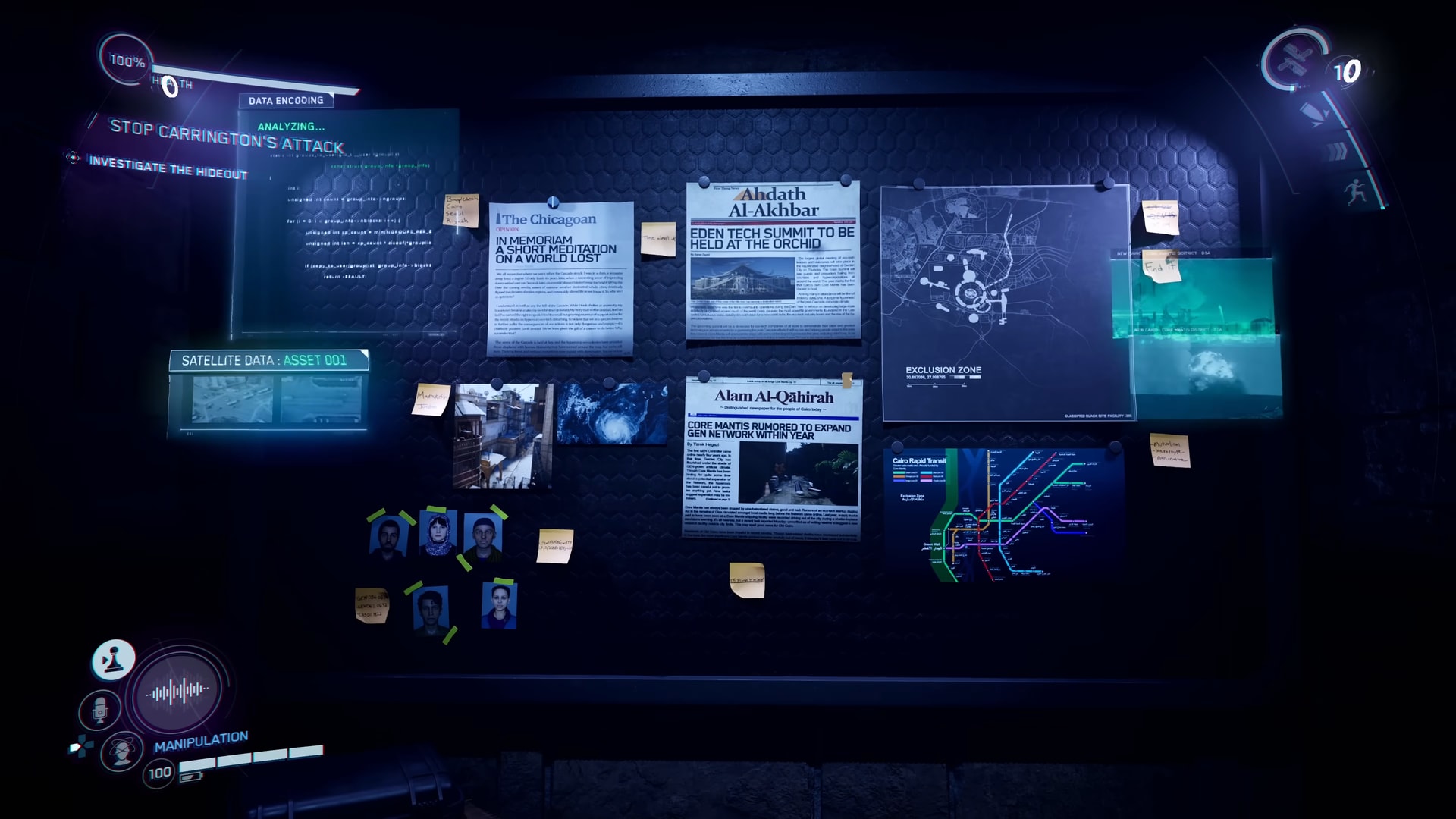
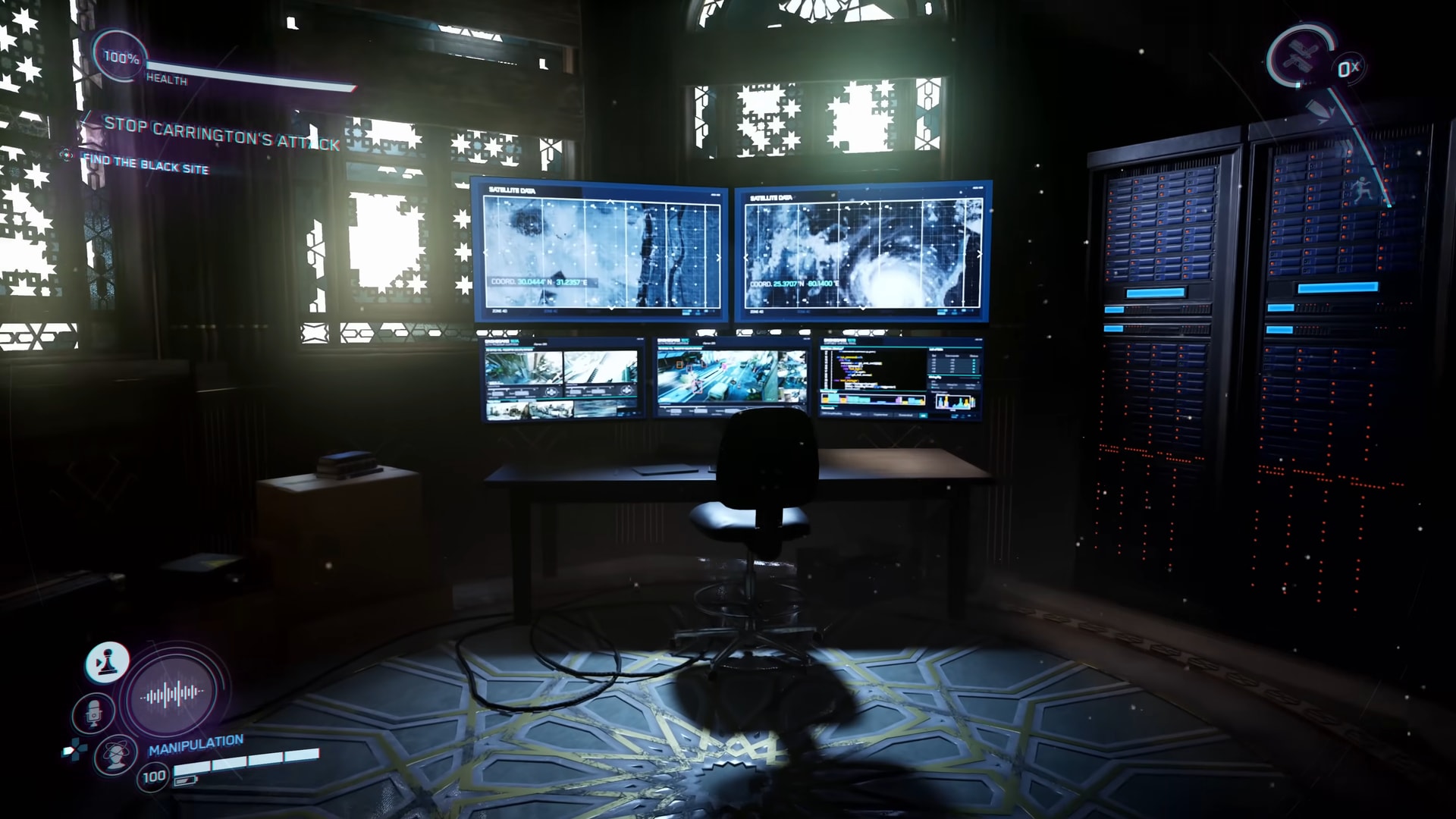
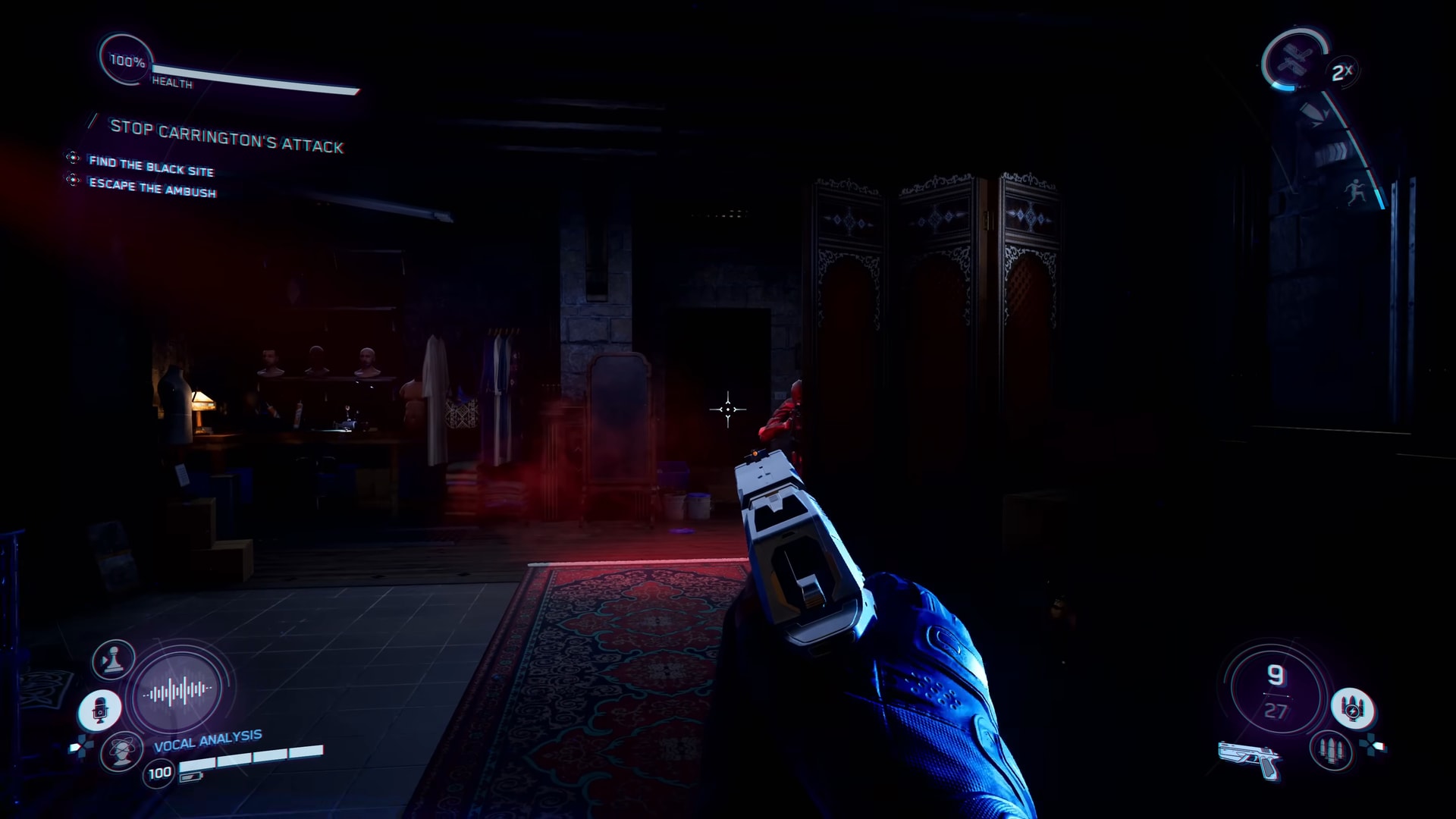
The inside of Carrington’s hideout was a lot of fun to design, and I pitched plenty of ideas and Easter eggs. We wanted an ad-hoc setup: this is a character who is effectively a chameleon and works through disguises. The prosthetic bodysuit was my pitch, and I was delighted to see it make the cut. This is also where my AR work is on screen. I designed the digital obsession board and its contents, and the hacking screen graphics, which one of our VFX artists animated.
Plaza
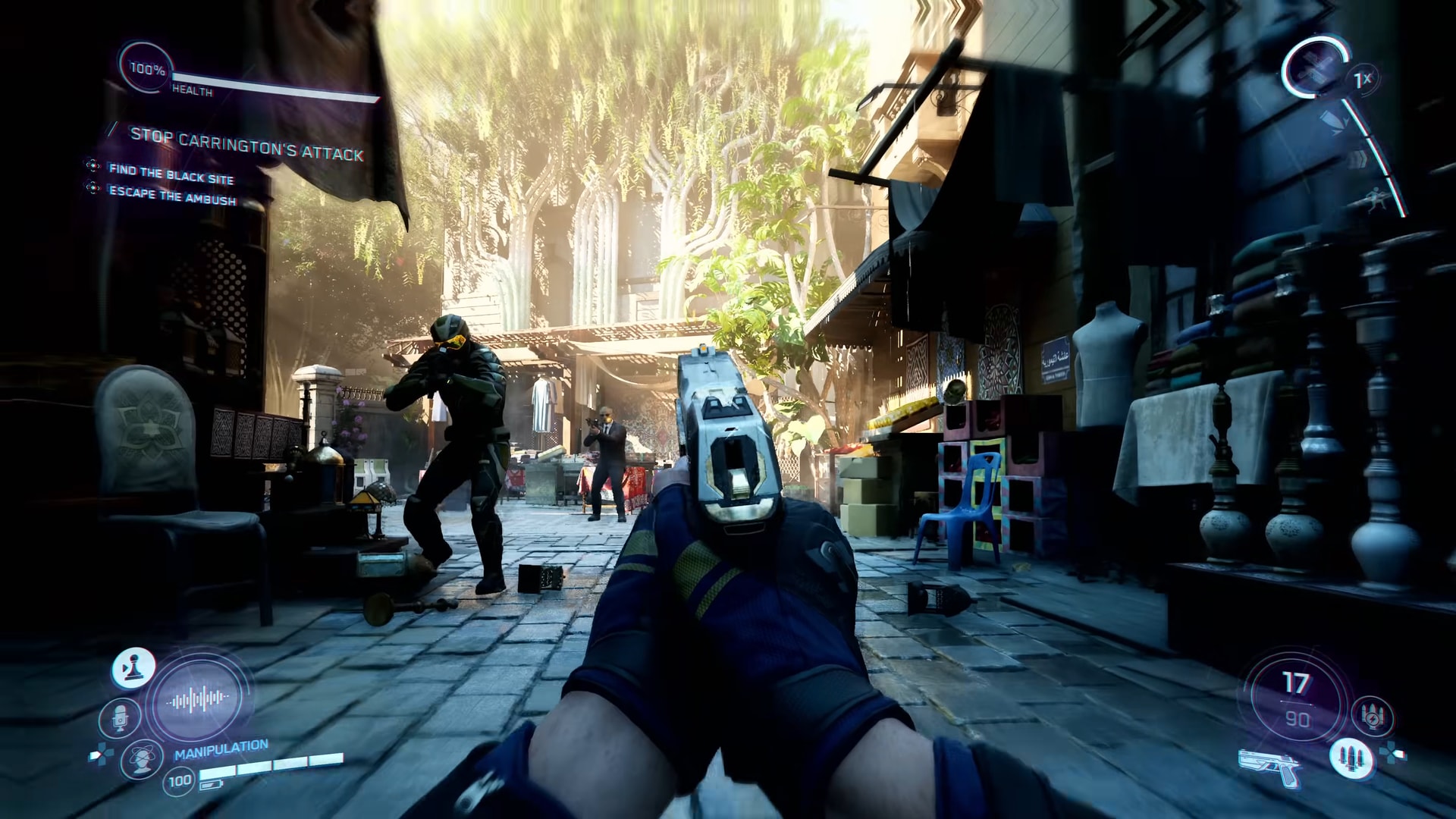
For the combat beat I concepted the first iteration of the market plaza. The pentagonal oranges were my idea, and the ask was that every orange be its own physics object, scattering under gunfire, without giving up our target frame rate of 60 fps. The VFX artists made it work, and the day they did was a celebration for the whole team.
Black Site
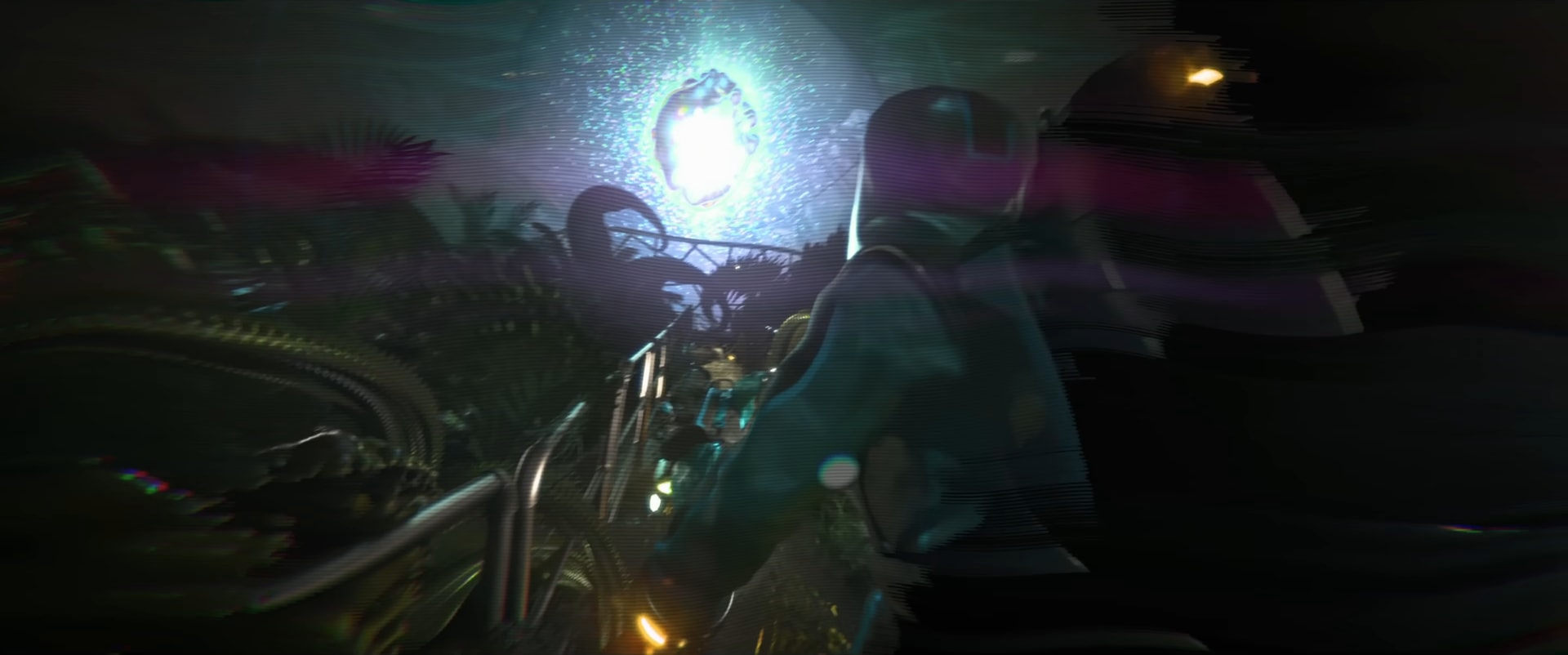
The black site’s glowing core, the trailer’s last scene before the logo, began as one of my blue-sky pitches, with a teammate carrying it to the screen. Of everything on this page, it is the idea that traveled furthest, from a pitch to the final shot of the reveal.
Logo
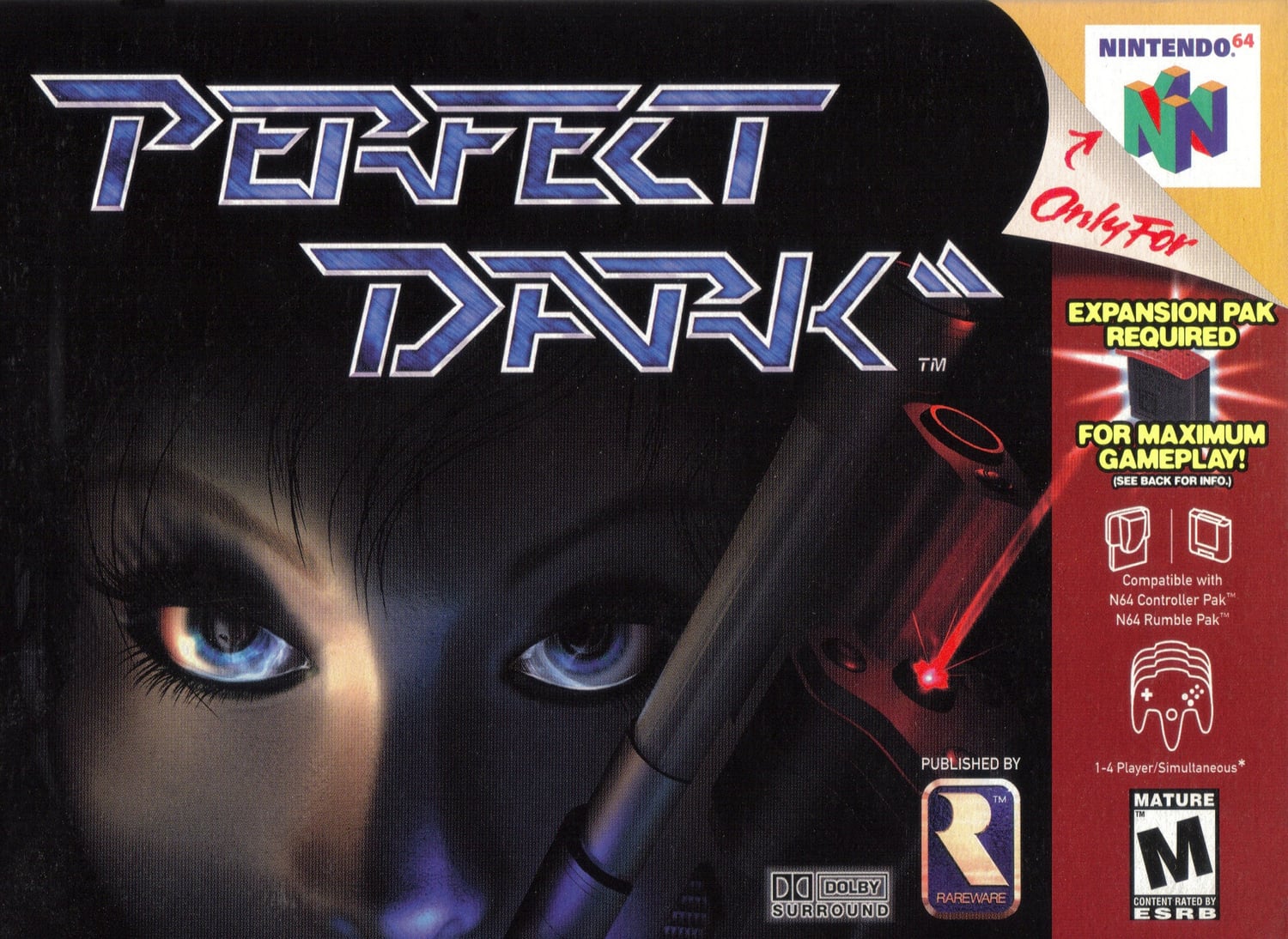
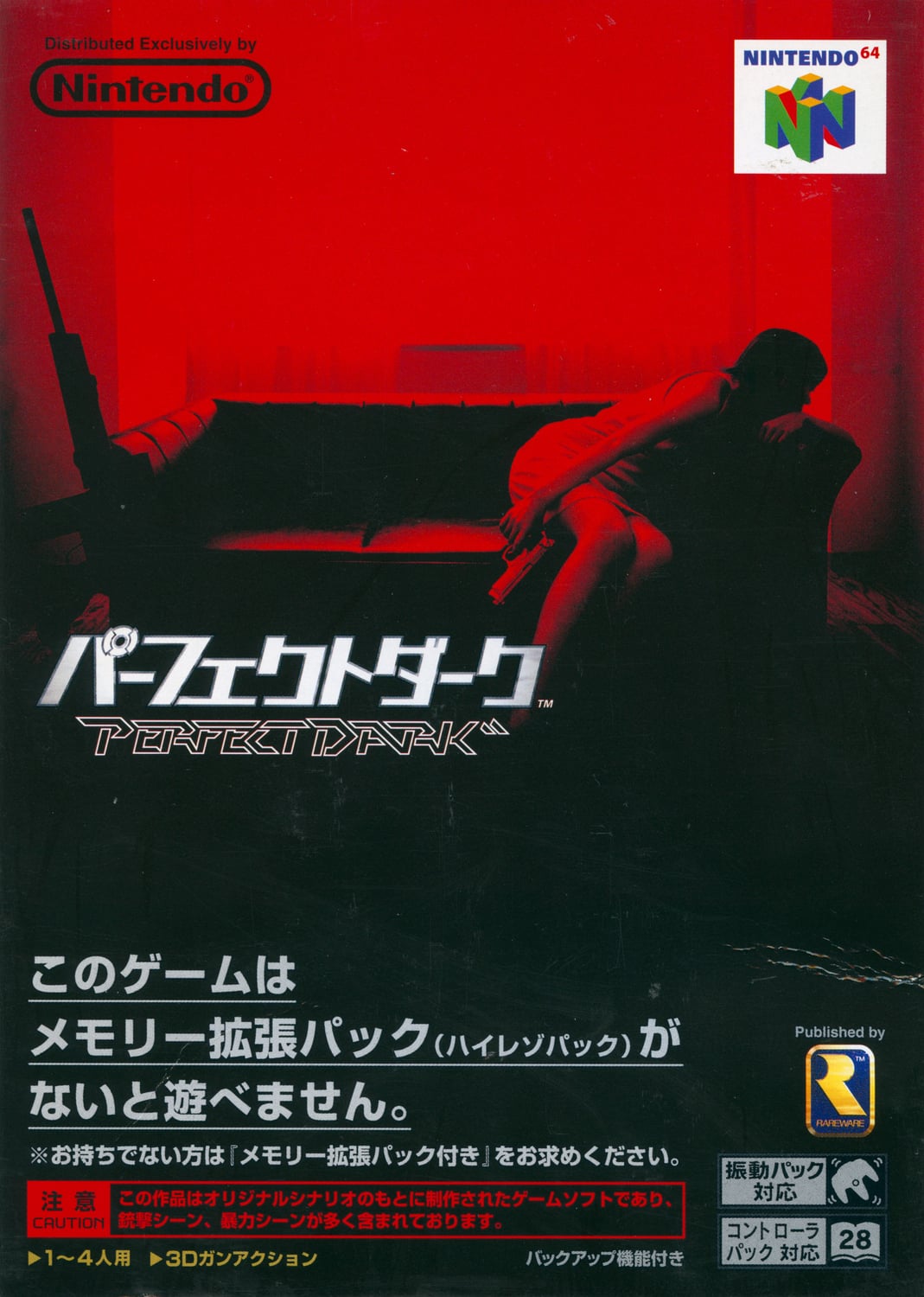
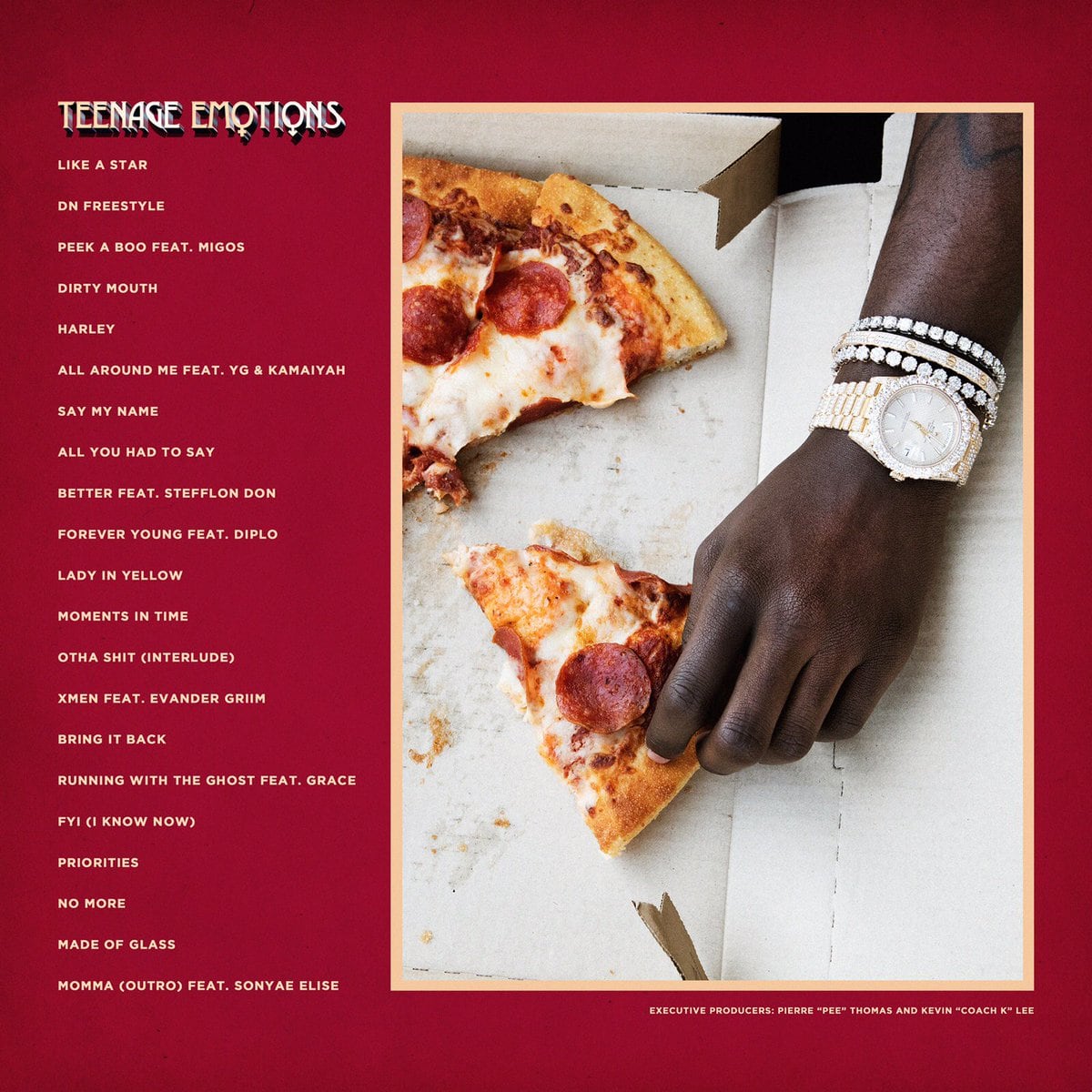
The trailer ends on the new Perfect Dark logo, designed by our UI/UX director. It replaced the 2020 announcement logo, an iteration of my own treatment. The original game came out in 2000, and by 2020 its look had boomeranged back into style, so I started by tracing the logo off the N64 box art. From there I traded the standard blue of the American box for the standout red of the Japanese one, with the exact shade lifted from the back cover of Lil Yachty’s Teenage Emotions. The mark I cared most about was the dakuten after the name, the “quotation mark” accent that, by the anecdotes I dug up, Rare included to make the title feel more Japanese and foreign. The 2024 logo took what was cool about the legacy one, the angular strokes and that mark, and modernized it for a new era, a microcosm for the project itself.
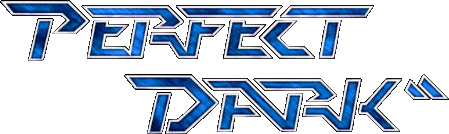 2000
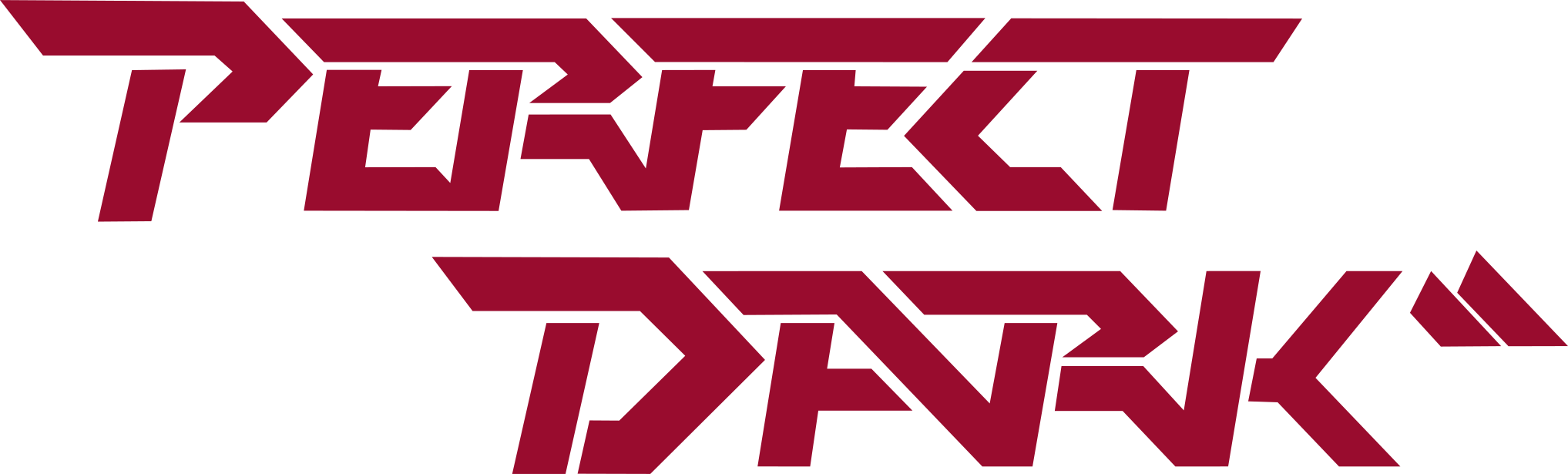 My tracing
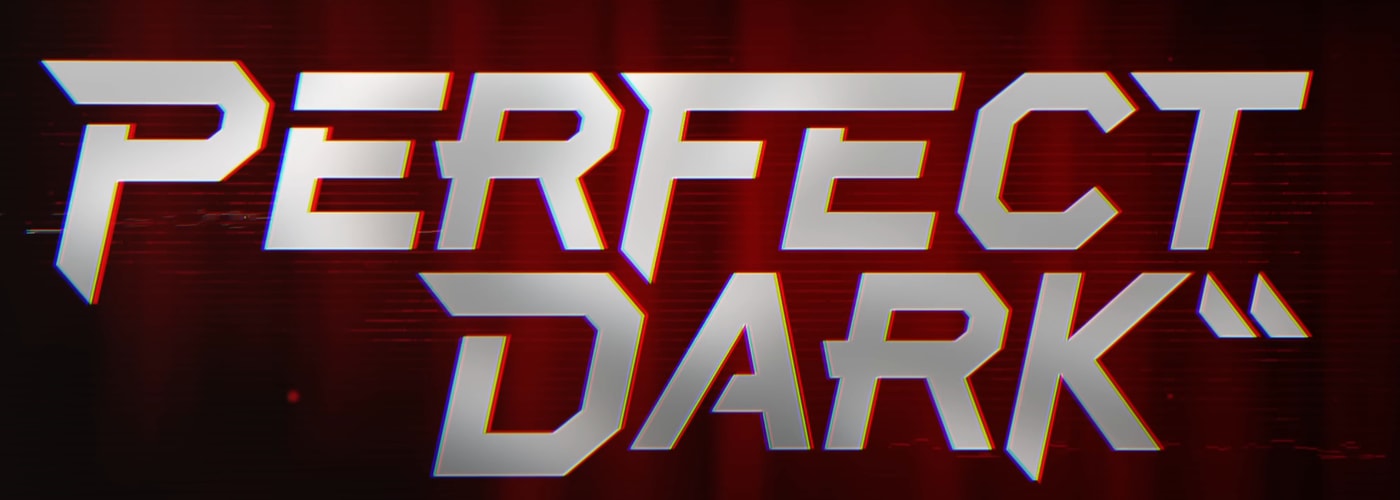 2020
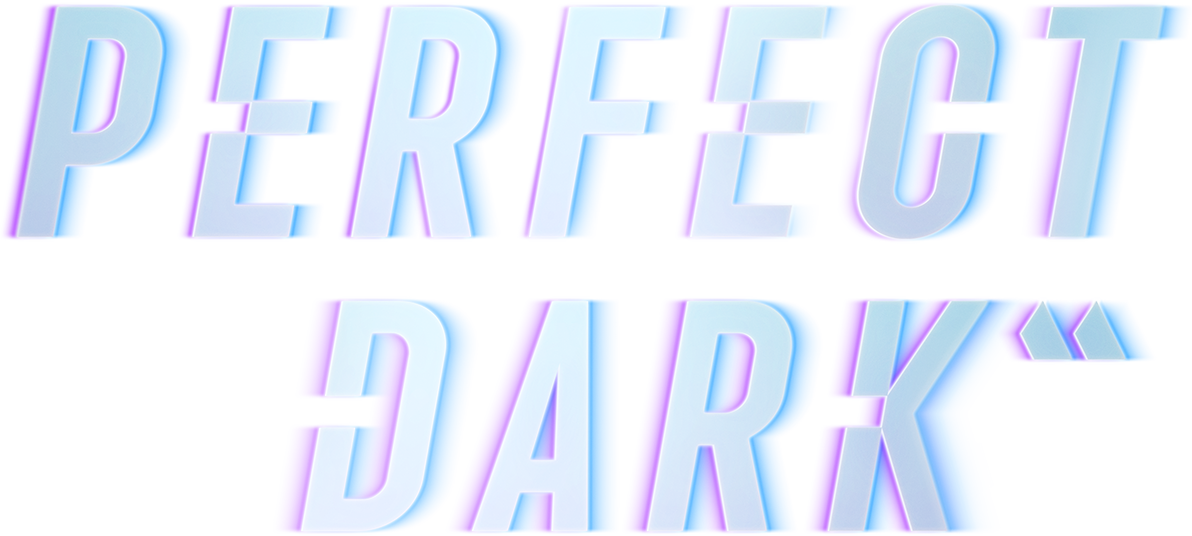 2024
I’m extremely proud of the work we did on Team Perfect Dark. When I joined The Initiative I was still in my first year in the industry, working alongside veterans of the studios whose games I grew up on. It fundamentally changed how I think about games: I now think about what it takes for an idea to survive from blue sky all the way to the screen, and whether it still feels right once you’re on the sticks.
To the concept team and the leadership who taught me so much over those 7 years, thank you. The collaborators below are a fraction of the team across The Initiative and Crystal Dynamics.
Concept Leadership
- Eric Persson
- Lead Concept Artist / Art Director
- Erik Jakobsen
- Art Director
- Horia Dociu
- Art Director
- Michael Baytion
- Assistant Art Director
- Miles Williams
- Production Designer
- Nicole Plum
- Outsource Manager / Concept Art Producer
Concept Team
- Brock Grossman
- Concept Artist
- Chris Doretz
- Concept Artist
- Isaac Kim
- Concept Artist
- Jeremy Hunter
- Concept Artist
- Jessica Cheng
- Senior Concept Artist
- Jorge Molina
- Character Concept Artist
- Kanish Palathingal
- Senior Character Concept Artist
- Lei Jin
- Concept Artist
Other Departments
- Darrell Gallagher
- Studio Head
- Heather Jackett
- Lead Level Designer
- Jaime Molina
- Environment Artist
- Jolyon Myers
- Principal World Builder
- Josh Pegram
- Environment Artist
- Kerrigan Marois
- Environment Artist
- Leonardo Cunha
- VFX Artist
- Mark Bristol
- Storyboard Artist
- Rich Burns
- UI/UX Director